Category: Job

  • Artificial Intelligence Engineer: The Ultimate Career Guide for 2026

    Artificial Intelligence Engineer: The Ultimate Career Guide for 2026

    The year 2026 is not a distant future; it is our present reality. We live in an era where algorithms curate our news, virtual assistants manage our schedules, and generative models craft everything from poetry to computer code. At the heart of this silent revolution, bridging the gap between theoretical data science and tangible software products, is a highly sought-after professional: the Artificial Intelligence Engineer.

    Far from being just another tech job, the role of an Artificial Intelligence Engineer has emerged as the cornerstone of modern innovation. These professionals are the builders, the integrators, and the deployers of the intelligent systems that are reshaping every industry, from finance and healthcare to entertainment and logistics. If you are aspiring to enter this field or looking to understand its immense value, this comprehensive guide will walk you through the realities, rewards, and roadmap of becoming an Artificial Intelligence Engineer in 2026 and beyond .

    Who Exactly is an Artificial Intelligence Engineer?

    Artificial Intelligence Engineer
    Artificial Intelligence Engineer

    The first step to understanding this career is clearing up a common misconception. An Artificial Intelligence Engineer is distinctly different from a Data Scientist or a traditional Machine Learning (ML) Researcher . While a Data Scientist acts as a detective, analyzing data to find trends and answer business questions, an Artificial Intelligence Engineer is the architect who uses those insights to build a functioning, scalable system .

    Think of it this way: if a Data Scientist discovers that customers who buy a certain product are likely to buy another, the Artificial Intelligence Engineer builds the real-time recommendation engine that serves that suggestion to millions of users within milliseconds.

    The core difference lies in focus. A Machine Learning Researcher might spend months training a new model from scratch and publishing papers on its architecture. In contrast, an Artificial Intelligence Engineer is a pragmatic builder. They leverage existing powerful models (like GPT-4 or Claude) and use their software engineering prowess to integrate these models into applications, optimizing them for performance, reliability, and user experience. They are, in essence, full-stack developers for the age of artificial intelligence .

    The Core Responsibilities: What Does an AI Engineer Actually Do?

    The day-to-day life of an Artificial Intelligence Engineer is a dynamic blend of coding, system design, and continuous learning. Their primary goal is to take AI models out of the lab and put them into the hands of users. This involves a multifaceted set of responsibilities :

    1. Designing and Managing Data Pipelines

    Before any AI can work, it needs data. AI engineers design and implement scalable data ingestion pipelines. They handle diverse content types—structured databases, semi-structured logs, and unstructured text or images—to ensure a clean, consistent flow of information to their AI systems.

    2. Retrieval-Augmented Generation (RAG) and Vector Databases

    One of the hottest skills for an Artificial Intelligence Engineer today is building RAG systems. Since Large Language Models (LLMs) have a limited “memory” of the data they were trained on, RAG allows them to pull in fresh, relevant information from a company’s private documents . This requires engineers to master vector databases like Pinecone or Milvus, which store data as mathematical representations (embeddings) for lightning-fast semantic search .

    3. API Development and Integration

    An AI model is useless if no one can interact with it. AI engineers are responsible for building the APIs (Application Programming Interfaces) that allow front-end applications, like a mobile app or a website, to communicate with the AI. They ensure these interfaces are secure, efficient, and can handle thousands of requests per second .

    4. Orchestration and Automation

    In a production environment, AI workflows are rarely a single step. An Artificial Intelligence Engineer uses orchestration tools like LangChain or LlamaIndex to chain together multiple calls to models, databases, and external tools. For instance, an AI agent that can book a flight for you might need to call a model to understand your request, query a database for flight times, use another tool to check your calendar, and then finalize the booking—all orchestrated seamlessly .

    5. Performance Optimization and MLOps

    Deploying a model is just the beginning. AI engineers must constantly monitor their systems for latency, accuracy, and cost. They implement MLOps (Machine Learning Operations) practices, using CI/CD pipelines, containerization with Docker, and cloud platforms like AWS, Azure, or GCP to ensure the AI system remains healthy, scalable, and up-to-date .

    The 2026 Skillset: Your Arsenal for Success

    To thrive as an Artificial Intelligence Engineer, you need a “T-shaped” skillset: broad knowledge across the AI landscape and deep expertise in a few critical areas .

    The Non-Negotiables

    • Programming Proficiency: Python is the undisputed lingua franca of AI. You must be comfortable with its ecosystem, including libraries like pandas and numpy. A solid grasp of software engineering principles—version control (Git), data structures, and algorithms—is essential .

    • Cloud Computing: AI lives in the cloud. Familiarity with at least one major provider (AWS, Azure, or GCP) and their AI/ML services (like SageMaker or Azure AI) is a prerequisite for almost any role today .

    The Core AI Toolkit

    • LLM Mastery: This goes beyond just using ChatGPT. It involves understanding how to effectively prompt models (prompt engineering), fine-tune them for specific tasks (using techniques like LoRA), and manage their inherent limitations .

    • RAG and Vector Databases: As mentioned, this is the cornerstone of modern AI applications. You need hands-on experience building systems that can retrieve and reason over custom data.

    • Frameworks and Tools: LangChain and LlamaIndex are must-know frameworks for orchestrating complex AI workflows. Understanding how to work with embeddings and vector search is equally critical .

    The Underlying Foundation

    • Mathematics: You don’t need a PhD, but a strong conceptual understanding of linear algebra (matrices, vectors), probability, and statistics is vital. This isn’t about manual calculation; it’s about diagnosing why a model is failing. Understanding the “why” behind the algorithms makes you a far more effective engineer .

    • Artificial Intelligence Engineer
      Artificial Intelligence Engineer

    Why This Career is a Golden Ticket in 2026

    The demand for skilled Artificial Intelligence Engineers is not just high; it is explosive. As AI shifts from a “nice-to-have” to a core business driver, companies are desperately seeking professionals who can bridge the gap between promise and delivery.

    • Unprecedented Demand: Global tech firms, financial institutions, and startups are all racing to integrate AI. A recent job posting from a major bank for an AI Engineer highlights the need for experience with Azure AI, vector databases, and full software development lifecycles, offering salaries in the range of $96,900 – $136,800 CAD, reflecting the high value placed on these skills .

    • Lucrative Compensation: The investment in AI talent is reflected in the pay. In the United States, Artificial Intelligence Engineers command average salaries well over $150,000 per year, with top earners approaching $300,000 . In India, experienced professionals can expect between ₹10 to ₹25 Lakhs per annum .

    • Future-Proofing Your Career: Unlike roles that may be automated, the job of building and managing automation itself is inherently secure. As long as technology evolves, the need for skilled Artificial Intelligence Engineers will only grow .

    Your Roadmap: How to Become an AI Engineer

    Artificial Intelligence Enginee
    Artificial Intelligence Enginee


    Embarking on this path can seem daunting, but it can be broken down into manageable phases .

    Phase 1: Build Your Foundation (Months 1-3)

    Start with the basics. Learn Python thoroughly, including its syntax and core libraries. Familiarize yourself with essential tools like Git for version control. Simultaneously, revisit the fundamentals of linear algebra and statistics through online resources like Khan Academy or 3Blue1Brown’s YouTube series .

    Phase 2: Dive into AI Fundamentals (Months 3-6)

    Once you can code, start learning the theory. Understand what machine learning is, the difference between supervised and unsupervised learning, and how neural networks function. You don’t need to be an expert, but you need a solid mental model .

    Phase 3: Master the Modern AI Stack (Months 6-9)

    This is where you become an Artificial Intelligence Engineer. Start working with LLM APIs from OpenAI or Anthropic. Learn the art of prompt engineering. Then, build your first RAG application: create a simple chatbot that can answer questions based on the content of a PDF file you upload. This single project will teach you about embeddings, vector databases, and context windows .

    Phase 4: Go to Production (Months 9-12)

    Your project is great on your laptop, but it needs to run in the real world. Learn how to deploy your AI application using a cloud platform. Containerize it with Docker, and explore MLOps concepts for monitoring and maintaining it. This experience is what employers value most .

    The Future of AI Engineering

    The field is evolving at warp speed. Tomorrow’s Artificial Intelligence Engineer will not just be building simple chatbots; they will be architecting complex systems of autonomous AI agents that can collaborate to solve multi-step problems. Concepts like the Model Context Protocol (MCP), which standardizes how AI agents connect with external data and tools, are already on the horizon . The ability to adapt, learn continuously, and build robust, responsible, and ethical AI systems will be the defining trait of successful engineers .

    Conclusion

    The age of artificial intelligence is here, and it is being built by Artificial Intelligence Engineers. This is a career path that offers not just financial reward, but the profound satisfaction of creating the future. It demands a blend of rigorous engineering, creative problem-solving, and a relentless curiosity.

    If you are ready to move from being a consumer of technology to a creator of it, there has never been a better time to start your journey. The intelligent future is waiting to be architected, and the blueprints are in your hands.

    7 Reasons Why a Data Scientist Career is the Ultimate Goldmine in 2026

  • 7 Reasons Why a Data Scientist Career is the Ultimate Goldmine in 2026

    7 Reasons Why a Data Scientist Career is the Ultimate Goldmine in 2026

    In today’s data-driven world, one role stands head and shoulders above the rest as the most transformative and sought-after profession: the Data Scientist. Often hailed as the “sexiest job of the 21st century,” a Data Scientist is much more than just a number cruncher. They are a hybrid of computer scientist, statistician, and business strategist, equipped with the unique ability to extract meaningful insights from the chaotic deluge of big data. As we navigate through 2026, the demand for these professionals has not only sustained but intensified, becoming the backbone of decision-making across every industry imaginable.

    This comprehensive guide will walk you through everything you need to know about becoming a successful Data Scientist, from core responsibilities and salary expectations to the essential skills and strategies for landing your dream job.

    What Exactly Does a Data Scientist Do?

    Data Scientist
    Data Scientist

    At its core, the role of a Data Scientist revolves around solving complex problems using data. They are the detectives of the digital age, using analytical tools and techniques to uncover hidden patterns, trends, and correlations . A typical day for a Data Scientist involves a multifaceted approach to data.

    It begins with identifying and gathering relevant data from various sources, which could range from company databases to publicly available information through web scraping .

    However, raw data is often messy and unstructured. A significant portion of their time is spent on “data cleaning,” a meticulous process of structuring and organizing data to make it readable and usable for analysis .

    Once the data is pristine, the Data Scientist employs advanced statistical methods and machine learning algorithms to build predictive models. This could involve forecasting sales, detecting fraudulent transactions, or developing recommendation systems, like the ones used by Netflix or Amazon . For instance, a Data Scientist at a fintech company might build a fraud detection model that analyzes millions of transactions in real-time to flag suspicious activity .

    The final, and perhaps most critical, step is communication. A Data Scientist must translate their complex findings into compelling stories using data visualization tools like Tableau or Looker, presenting actionable recommendations to non-technical stakeholders such as marketing heads or product managers . This end-to-end process—from data gathering to business strategy—is what makes the role so pivotal.

    Data Scientist vs. Other Data Professions

    The data ecosystem is crowded with various titles, and it’s easy to confuse the role of a Data Scientist with others. Understanding these distinctions is crucial for anyone looking to enter the field. While a Data Analyst focuses on interpreting existing data to create dashboards and reports using tools like SQL and Excel, a Data Scientist takes it a step further by using machine learning to make predictions about the future . Think of the analyst as someone who describes what happened, while the Data Scientist predicts what will happen next.

    Similarly, the roles of ML Engineer and Data Engineer are often intertwined with data science. An ML Engineer is responsible for taking the models built by a Data Scientist and deploying them into scalable, reliable production systems. They are the builders who ensure that a model works efficiently for millions of users . The Data Engineer, on the other hand, builds and maintains the infrastructure—the data pipelines and storage systems—that a Data Scientist relies on to access clean and consistent data . In essence, if data is the new oil, the Data Engineer builds the pipeline, the Data Scientist refines it into fuel, and the ML Engineer builds the engine that runs on it.

    Salary and Job Outlook

    If you are considering a career as a Data Scientist, the financial rewards and job security are exceptionally compelling. According to the U.S. Bureau of Labor Statistics, the median annual wage for Data Scientist was $112,590 in May 2024, with the highest 10 percent earning more than $194,410 . This lucrative pay scale reflects the high level of skill and value they bring to an organization. Entry-level positions typically start lower but rise quickly with experience, while senior Data Scientist roles, especially in tech hubs like San Francisco or New York, can command salaries well over $200,000, often including equity and bonuses .

    The job outlook is even more impressive. Employment for Data Scientist is projected to grow by a staggering 34 percent from 2024 to 2034, a rate classified as “much faster than average” compared to all other occupations . This explosive growth is driven by the ever-increasing volume of data generated by businesses and the pressing need to make data-driven decisions. Organizations across every sector—from insurance and healthcare to retail and finance—are seeking skilled Data Scientist professionals to mine this information and gain a competitive edge.

    This high demand translates to approximately 23,400 new openings for Data Scientist each year over the decade, primarily due to industry growth and the need to replace workers transitioning to other roles .

    How to Become a Data Scientist

    Embarking on the path to becoming a Data Scientist requires a strategic mix of education, technical skills, and practical experience. While a bachelor’s degree in a quantitative field like computer science, statistics, or mathematics is the typical entry-level requirement, many employers now prefer candidates with a master’s degree or even a Ph.D. due to the complexity of the work .

    Data Scientist
    Data Scientist

    The Educational Path

    A strong educational foundation is critical. Aspiring Data Scientist should focus on courses in linear algebra, calculus, and probability and statistics . At the university level, this must be complemented by computer science courses that teach data-oriented programming languages. Formal degrees from institutions offering specialized programs in data science or business analytics are highly valued, as they provide a structured curriculum covering everything from database management to machine learning .

    Essential Technical Skills

    To succeed as a Data Scientist, mastery of several technical skills is non-negotiable:

    • Programming Languages: Proficiency in Python or R is essential for data manipulation, statistical analysis, and building machine learning models . SQL is equally critical for extracting and querying data from databases .

    • Machine Learning & Statistics: A deep understanding of supervised and unsupervised learning, regression, classification, clustering, and time-series analysis is fundamental . A Data Scientist must know not just how to run algorithms, but also the math behind them to choose the right model for the problem.

    • Big Data Technologies: As companies deal with massive datasets, familiarity with big data tools like Apache Spark, Hadoop, and cloud platforms (AWS, GCP, Azure) is becoming increasingly important .

    Landing Your First Job: The 2026 Playbook

    Breaking into data science in 2026 is competitive, but a focused strategy can set you apart. It’s no longer enough to just list skills; you must demonstrate your ability to solve real-world problems.

    The Power of a Portfolio

    Recruiters want to see proof of your work. Instead of just listing buzzwords like “machine learning” on your resume, you need to showcase impactful projects . Participate in platforms like Kaggle to work on real-world datasets, such as fraud detection or sales forecasting. For each project, clearly document the problem, your approach, the technical details (like using XGBoost or LSTM), and, most importantly, the quantitative impact of your model . A strong portfolio with 3-5 diverse projects can often speak louder than a degree.

    Crafting a Winning Resume

    Your resume is your marketing document. Avoid the common mistake of making it a generic list of skills. Instead, tailor it for each job application by mirroring the keywords from the job description . Use the “Problem-Solution-Impact” format for your bullet points. For example, don’t just say “built a model.” Say, “Built a random forest model to predict customer churn, identifying at-risk customers with 85% accuracy and helping the retention team reduce churn by 15%.” Quantifying your achievements with numbers is the single most effective way to get a hiring manager’s attention .

    Acing the Interview

    Data Scientist
    Data Scientist

    The interview process for a Data Scientist is notoriously rigorous, often testing both your technical depth and your business acumen. You can expect questions ranging from fundamental concepts to complex problem-solving scenarios.

    Common Technical Questions

    Be prepared to answer questions that probe your understanding of machine learning fundamentals. You might be asked, “Can you explain the difference between supervised and unsupervised learning?” or “How do you handle imbalanced datasets?” . Interviewers will also want to know how you evaluate models.

    A strong answer would discuss metrics like precision, recall, F1-score, and the importance of cross-validation to avoid overfitting . You should also be ready to explain techniques like regularization (L1 vs. L2) and how they help prevent overfitting by penalizing complex models .

    Demonstrating Business Acumen

    Beyond technical skills, a great Data Scientist must be a great communicator. You will likely face questions like, “How would you explain a decision tree to someone who isn’t technical?” . The goal is to assess if you can translate complex analytical results into actionable business recommendations. Show that you don’t just live in a world of algorithms, but that you understand the market, the customer, and the key performance indicators that drive the business . Your ability to tell a story with data and influence strategic decisions is what truly makes you invaluable as a Data Scientist .

    In conclusion, the journey to becoming a Data Scientist is demanding but incredibly rewarding. It requires a lifelong commitment to learning, given the fast-paced evolution of tools like Generative AI and LLMs . However, for those with a passion for problem-solving and a curiosity for uncovering insights hidden within data, it offers a career that is not only financially lucrative but also intellectually stimulating and central to the future of innovation. The world runs on data, and Data Scientist are the ones who make sense of it all.

    How to Become a Top AI Architect in 2026: 5 Proven Strategies

  • How to Become a Top AI Architect in 2026: 5 Proven Strategies

    How to Become a Top AI Architect in 2026: 5 Proven Strategies

    The landscape of artificial intelligence is shifting beneath our feet. As we move through 2026, the initial hype around generative AI has matured into a practical, enterprise-wide transformation. Companies are no longer asking “what can AI do?” but rather “how do we integrate AI safely, scalably, and profitably?” At the center of this tectonic shift stands a role that barely existed five years ago but has now become the cornerstone of modern technology strategy: the AI Architect.

    If you are an IT professional looking to pivot, a business leader planning your technology roadmap, or simply curious about where the industry is heading, understanding the AI Architect is essential. This is not just another job title; it is the master planner of the intelligent enterprise. In this comprehensive guide, we will explore what an AI Architect does, why this role commands salaries exceeding $175,000 in premium markets, the skills required to become one, and how this profession is shaping the future of work in 2026 and beyond .

    What Exactly is an AI Architect?

    Let us begin with a clear definition. An AI Architect is a senior-level technology professional responsible for designing the end-to-end structure of artificial intelligence systems within an organization . Think of them as the chief blueprint designer for a skyscraper—except this skyscraper is made of data pipelines, machine learning models, cloud infrastructure, and governance frameworks.

    Unlike a data scientist who focuses on building and tuning models, or a machine learning engineer who deploys those models into production, the AI Architect takes a holistic view. They connect data engineering, applied AI, and agentic intelligence, ensuring that every piece of the puzzle works together harmoniously to deliver measurable business value . According to job postings from leading firms like Accenture and NCS, the AI Architect is expected to design architectures that span public, private, or sovereign clouds, incorporating the latest innovations in AI Agents, Generative AI, Foundation Models, and knowledge engineering .

    AI Architect
    AI Architect

    In 2026, this role has become critical because organizations have moved beyond experimentation. The question is no longer “can we build a chatbot?” but “how do we build a secure, compliant, and scalable AI platform that serves thousands of employees and millions of customers?” That question falls squarely on the shoulders of the AI Architect.

    Why the AI Architect Role is Exploding in 2026

    The demand for AI Architect professionals has not happened by accident. Several converging trends have elevated this role to its current prominence.

    First, the shift from experimentation to enterprise-scale implementation is now complete. During the initial generative AI boom, companies rushed to create proofs-of-concept. Today, those same companies are struggling to move those concepts into production reliably. This is where the AI Architect steps in, creating the blueprints and guardrails that enable safe scaling .

    Second, the complexity of modern AI stacks has become overwhelming. An enterprise AI system today might involve multiple large language models, vector databases for semantic search, agentic frameworks for autonomous reasoning, and strict governance protocols. Without a dedicated AI Architect to orchestrate these components, projects quickly descend into technical debt and operational chaos .

    Third, regulatory pressures have intensified. Premium economies like the United States and European Union are implementing stricter AI governance requirements. Organizations need an AI Architect who can embed compliance, security, and ethical considerations directly into the system architecture, not bolt them on as an afterthought .

    The compensation reflects this criticality. According to Robert Half’s 2026 salary guide, the average starting salary for an AI Architect in the United States ranges between $142,750 and $196,750, with a mid-experienced professional commanding approximately $175,000 . In the UK contract market, daily rates for an AI Architect have reached £550 in regions like the East of England, underscoring the premium placed on this expertise .

    Core Responsibilities of an AI Architect

    What does an AI Architect actually do on a day-to-day basis? Based on current job descriptions from leading global firms, the responsibilities fall into several key categories .

    Strategy and Planning

    An AI Architect begins by understanding the business landscape. They lead architecture workshops with clients and internal teams, helping to finalize architectural requirements for AI solutions. They evaluate and select the appropriate technologies for the full stack of an AI platform, whether that involves cloud-native services from AWS, Azure, or Google Cloud, or open-source frameworks. They also develop TCO models to assess the financial viability of AI investments, ensuring that architectural decisions align with budget realities .

    Architecture and Design

    AI Architect
    AI Architect

    This is the creative core of the role. The AI Architect designs and documents architectural blueprints across multiple dimensions. These include multi-agent architecture blueprints for autonomous systems, AI security architecture blueprints to protect sensitive data, AI governance solutions to ensure compliance, and knowledge architecture consisting of knowledge graphs and semantic layers that enable AI Agents to reason effectively .

    Modern AI Architect roles also require designing for Retrieval-Augmented Generation, where internal company data is securely accessed by AI models in real-time to generate contextually accurate responses. This involves architecting vector databases and integration layers that make proprietary knowledge available to AI systems without compromising security .

    Implementation Oversight

    While the AI Architect may not write every line of code, they provide technical leadership during implementation. They oversee the development of AgentOps and LLMOps solutions, ensuring that AI systems are observable, monitorable, and maintainable. They troubleshoot performance issues, analyze system bottlenecks, and recommend optimizations for cost, reliability, and trust. When reusable AI components or solution patterns are needed, the AI Architect designs them .

    Governance and Security

    In 2026, an AI Architect cannot ignore governance. They are responsible for incorporating AI security into platforms and solutions from the ground up. This means designing for fairness, transparency, and auditability—qualities increasingly demanded by regulators and the public alike. They establish blueprints for AI governance, ensuring that every model’s decisions can be traced and reviewed .

    The Technical Toolkit of an AI Architect

    Becoming an AI Architect requires mastery of a diverse and rapidly evolving technology stack. The days of siloed expertise are over; today’s AI Architect must be fluent across multiple domains .

    Cloud Platforms

    Cloud expertise is non-negotiable. An AI Architect must have deep experience with at least one major cloud provider—AWS, Microsoft Azure, or Google Cloud Platform. They need to understand not just the basic services, but the specialized AI offerings. On Azure, this means familiarity with Azure Machine Learning, Azure OpenAI Service, and Azure AI Foundry. On AWS, it involves SageMaker, Bedrock, and related services. On Google Cloud, Vertex AI and Gemini integration are essential . The AI Architect uses these platforms to design scalable, cost-efficient AI infrastructures that leverage cloud-native capabilities while maintaining control over security and compliance.

    AI and Machine Learning Frameworks

    Beneath the cloud layer, the AI Architect must understand the fundamental frameworks that power AI models. TensorFlow and PyTorch remain the titans of deep learning, and familiarity with both is expected. For those specializing in generative AI and agentic systems, frameworks like LangChain, LlamaIndex, and CrewAI are becoming essential tools in the AI Architect‘s arsenal. These frameworks enable the orchestration of multiple AI agents and the construction of complex reasoning workflows .

    Data Engineering and Vector Databases

    AI is nothing without data. The AI Architect designs the data pipelines that feed AI systems. This involves expertise in data engineering tools like Spark, Kafka, and Airflow, as well as modern data lakehouse architectures. A particularly hot area in 2026 is vector databases—specialized systems like FAISS, Weaviate, Pinecone, and Chroma that store information based on semantic meaning. The AI Architect uses these to enable fast, accurate retrieval for RAG applications .

    MLOps and LLMOps

    Building a model is only half the battle; keeping it running reliably in production is where the AI Architect earns their keep. They design the MLOps and LLMOps pipelines that manage the entire machine learning lifecycle—from experiment tracking and model versioning to continuous deployment and performance monitoring. Tools like MLflow, Kubeflow, and custom CI/CD pipelines using GitHub Actions or Azure DevOps are part of the standard toolkit .

    Programming Proficiency

    At the foundation of everything is code. Python remains the lingua franca of AI, and an AI Architect must be highly proficient. This goes beyond basic scripting; they need to write modular, testable, and maintainable code. Familiarity with software engineering best practices—version control with Git, unit testing, and code reviews—is assumed .

    The Human Side: Soft Skills for AI Architects

    While technical depth is critical, the AI Architect role is equally about communication and leadership. In fact, many job postings emphasize that this is a “hybrid role” where technical expertise must be paired with strong human skills .

    An AI Architect regularly interfaces with C-level executives, translating complex technical trade-offs into business language. They must articulate why a particular architectural decision is necessary for compliance, or how a proposed design will deliver ROI. They facilitate workshops, lead architecture review boards, and mentor junior engineers .

    Strategic thinking is paramount. The AI Architect must anticipate future needs, designing systems that are not only fit for today’s requirements but adaptable to tomorrow’s innovations. They evaluate emerging technologies and make recommendations that shape their organization’s AI roadmap for years to come .

    Problem-solving under uncertainty is another hallmark. When a production AI system begins to drift or a cost spike threatens the budget, the AI Architect is called upon to diagnose the issue and implement corrective measures calmly and effectively .

    How to Become an AI Architect in 2026

    If the AI Architect role appeals to you, the good news is that there are multiple pathways to entry. This is not a position you land straight out of university; it typically requires years of foundational experience. However, with deliberate planning, you can accelerate your journey .

    The Traditional Path

    Most AI Architect professionals begin their careers in adjacent roles. Common starting points include software engineer, data engineer, machine learning engineer, or solutions architect. After gaining 5 to 10 years of experience—with at least a couple of years focused on AI and generative AI specifically—they transition into architecture roles . This progression ensures they have the breadth of knowledge required to design entire systems, not just components.

    The Skills-First Approach

    For those already in IT, a more targeted upskilling strategy can work. Begin by deepening your Python skills and mastering AI frameworks like LangChain. Build hands-on projects that demonstrate your ability to create RAG pipelines or agentic systems. Publish your work on GitHub and document your learning journey .

    Certifications can also help signal your expertise. Relevant credentials include cloud-specific certifications like Azure AI Engineer Associate, AWS Certified Machine Learning, or Google Professional Data Engineer. Vendor-neutral certifications in data science or AI can also bolster your resume .

    The Learning Roadmap

    A structured curriculum for aspiring AI Architect professionals should cover several layers. Start with machine learning fundamentals—supervised and unsupervised learning, evaluation metrics, and feature engineering. Move on to deep learning and neural networks, understanding architectures like CNNs and transformers. Then dive into generative AI and LLMs, learning how to prompt, fine-tune, and orchestrate them. Finally, master the deployment and operations side: MLOps, cloud infrastructure, and governance .

    Throughout this journey, the aspiring AI Architect should constantly ask not just “how does this work?” but “how would I design a system that uses this at scale?”

    The Future: AI Architect in the Age of Agentic AI

    Looking beyond 2026, the AI Architect role will continue to evolve. One of the most significant trends is the rise of Agentic AI—systems where AI agents act autonomously to accomplish goals without step-by-step human guidance . This represents a fundamental shift from today’s prompt-response paradigm to a world where AI systems plan, reason, and execute.

    For the AI Architect, agentic AI introduces new challenges. How do you design multi-agent systems where agents collaborate and compete? How do you ensure safety when an agent is making autonomous decisions? How do you observe and debug a system that is constantly adapting? Answering these questions will define the next generation of AI Architect practice.

    AI Architec
    AI Architec

    Another frontier is Physical AI—embedding intelligence into robots, autonomous vehicles, and industrial systems . The AI Architect who understands both the digital and physical realms will be in extraordinary demand as manufacturing, logistics, and healthcare are transformed by embodied intelligence.

    What remains constant is the need for holistic, strategic thinking. As long as organizations seek to harness AI for competitive advantage, they will need an AI Architect to show them the way.

    Conclusion

    The AI Architect has emerged as one of the most critical roles in the 2026 technology landscape. Charged with designing the end-to-end systems that power modern AI, this professional blends deep technical knowledge with strategic vision and communication skill. They command six-figure salaries in premium economies and are sought after by every forward-thinking enterprise.

    For technology professionals, the AI Architect path offers a compelling combination of intellectual challenge, financial reward, and lasting impact. It is a role that sits at the intersection of business and technology, shaping not just how AI is built, but what it can achieve.

    Whether you are considering this career for yourself or simply seeking to understand the forces reshaping our digital world, keep your eye on the AI Architect. In the architecture of the intelligent future, they are the ones drawing the blueprints.

    Hired As Santa Claus? 7 Deadly Rules You Must Know Now.

  • Hired As Santa Claus? 7 Deadly Rules You Must Know Now.

    Hired As Santa Claus? 7 Deadly Rules You Must Know Now.

    Congratulations. You have been hired as Santa Claus.Let’s not pretend. This wasn’t a meritocracy. There were no interviews, no vetting of credentials, no debates over your vision. You are here for a single, practical, and chilling reason: the suit happened to be your size.

    The last one stopped screaming, and the dimensions of your shoulders, the length of your inseam, matched the crimson wool and white fur. The mantle is yours. The sleigh is primed, the reindeer are pawing at the frost-laden roof with a restless energy that speaks of ancient pathways. Your global delivery window is imminent.

    But before you take up the reins, you must understand: this is not a role of mere gift-giving. It is a custodianship of a delicate, powerful, and perilous magic. There are rules. They are not suggestions. Ignore them, and you will not simply be fired. You will be unmade. Pay particular attention to the last one.

    The Nature of the Mantle

    First, disabuse yourself of the cultural cartoon. You are not a jolly, retired grandfather baking cookies in a polar workshop. You are a seasonal force, a necessary symbol woven into the fabric of belief, fear, and hope that peaks on a single night. The suit is not a costume; it is a symbiotic vessel. It contains the collective expectation of millions of children and the residual echoes of every man who wore it before you. The “job,” therefore, is one of preservation and precision. The magic operates on strict, paradoxical laws—whimsical on the surface, iron-clad beneath. Your predecessor learned this, to his detriment. His screaming has finally subsided. Let his experience be your primer.Santa Claus

    Santa Claus
    Santa Claus

    The Rules for Survival

    Rule No. 1: Never, under any circumstance, deliver a present to street address No. 6, 6 6.

    Its location feels transient and eerie. It might manifest as a solitary ‘6’ on a peaceful, deserted street, or transform into the sinister sequence ‘666’ materializing on a bleak, unexpected boulevard heavy with shadow.
    Yet the dwelling is always the same—an inviting facade of warm light and holiday stockings, a stark contrast to its shifting, spectral identity. Ignore it. The entity within is not a child. It may wear a child’s shape, it may whisper a child’s wishes, but it is a void that feeds on the magic of unconditional giving.

    To place a gift on that hearth is to anchor yourself to its hunger. Chimney to throat, fireplace to maw. Your trap is perpetual Christmas Eve—silent, static. Your sack: always full, always draining. You are the ghost in this machine, fueling an endless consumption that brings no joy. The sleigh cannot retrieve you. You will simply become part of the address’s decor.Santa Claus

    Rule No. 2: Never remove the suit. Not to sleep. Not to eat.

    The suit is your skin now. It will not soil, it will not tear. The compulsion to scratch, to feel a breeze on your stifled neck, will become overwhelming. You must not yield. The instant you finally unbuckle the clasp and peel the suffocating wool from your wrist, a dreadful truth will dawn: the person it once held is gone.
    The “you” that pulled on the suit was absorbed, integrated.

    Your flesh, your memories, your love of coffee or jazz or gardening—all have been translated into the operating system of Santa Claus. If you see emptiness under the fur, do not panic. It is not that you are gone; you have simply become elsewhere. Worse, the suit, offended by your attempt, will crawl back onto you. Its embrace will be colder, tighter, the fur feeling more like bristles, the buckles cinching with a resentful finality.

    Rule No. 3: Do not let the children see your face. Not truly.

    Santa Claus
    Santa Claus

    You will enter dim rooms, lit only by nightlights or the glow of a Christmas tree. A child may stir. If they squint through the gloom and murmur, “You don’t look like Santa,” remain calm. Ignore it.

    They’re remembering someone else. They are recalling the previous occupant of the suit, or a storybook illustration. Reassure them with a soft “Ho, ho, ho” and continue your work. This is normal.

    However, if a child’s eyes snap open, clear and awake, and they look at you—really look at you—and then smile, saying with utter certainty, “You look better this year,” RUN. Do not finish placing the gift.

    Do not reach for the cookie. They are not seeing you, nor any past Santa. They are seeing the suit’s true, shifting face, and they prefer it. That child is a sensitive, a beacon for things that watch from the edges of the myth. Your presence has been noted by more than just the child. Leave immediately.

    Rule No. 4: If any reindeer’s antlers are burning, do not approach. The fire is not heat; it’s attention.

    The reindeer are not animals. They are concepts given form: Dasher is Velocity, Prancer is Levity, Blitzen is Suddenness. Their antlers trace the ley lines of the night. Sometimes, they intersect with a point of fervent, desperate belief—a dying wish, a traumatic plea—and it manifests as a cold, spectral flame wreathing their antlers. This flame is attention. A focused, raw need from the waking world.Santa Claus

    If the burning reindeer turns its head toward you, lower your eyes and back away slowly. You are not the object of its gaze. It is looking through you, at the source of the signal. To meet that gaze is to forge a direct connection, to pull that concentrated despair or longing into the sleigh with you. It will taint every gift you deliver from that moment on. Let the reindeer process the signal. The flame will extinguish when the path is cleared.Santa Claus

    Rule No. 5: You must finish before sunrise.

    As the most critical and non-negotiable tenet, this rule is the essential foundation. Santa’s magic is confined to a liminal state—existing in the night, at the precise boundary of dates, and between wakefulness and dreaming. Consequently, sunrise acts not as a simple morning light, but as a total reset that erases the conditions necessary for that magic to exist.Santa Claus

    If the sun’s first ray catches you mid-delivery, several things will happen at once. The sleigh will lose its buoyancy, landing itself on the nearest surface with a final, hollow thud. The reindeer will kneel. But not for you. They will kneel toward the east, in a posture of submission or perhaps mourning. The connection is severed.

    Santa Claus
    Santa Claus

    And you? You will be stranded. The suit will become inert cloth, heavy and damp with melting frost. The boundless sack will be just a bag of toys. You will be a man in an absurd, fraying costume, surrounded by silent, kneeling beasts, as the ordinary world wakes up to a Christmas morning, some children inexplicably disappointed. The role will be vacant. Christmas needs a Santa Claus. The myth cannot lapse. Another will be found, hastily, before next year. Someone whose suit will fit.

    And you… you will be left with the memory of the magic and the crushing weight of the normal, a king dethroned at dawn, forever hearing the echoes of sleigh bells in every passing wind.

    The Final Benediction

    So, take up the sack. Feel its bottomless weight. Grease the runners. Check the reins. The world below, shimmering with lights and dreams, awaits its annual validation. You are not a person tonight; you are a function, a delivery mechanism for hope, bound by sacred, terrifying protocols. You were chosen because the suit fit. Now you must ensure the suit survives the night. The previous wearer’s screams have faded. Do not let yours be the next to echo in the workshop void.Santa Claus

    Avoid Catastrophe: 5 Haunting Protocols for Night Caregiver | Rule No. 6


  • Avoid Catastrophe: 5 Haunting Protocols for Night Caregiver | Rule No. 6

    Avoid Catastrophe: 5 Haunting Protocols for Night Caregiver | Rule No. 6

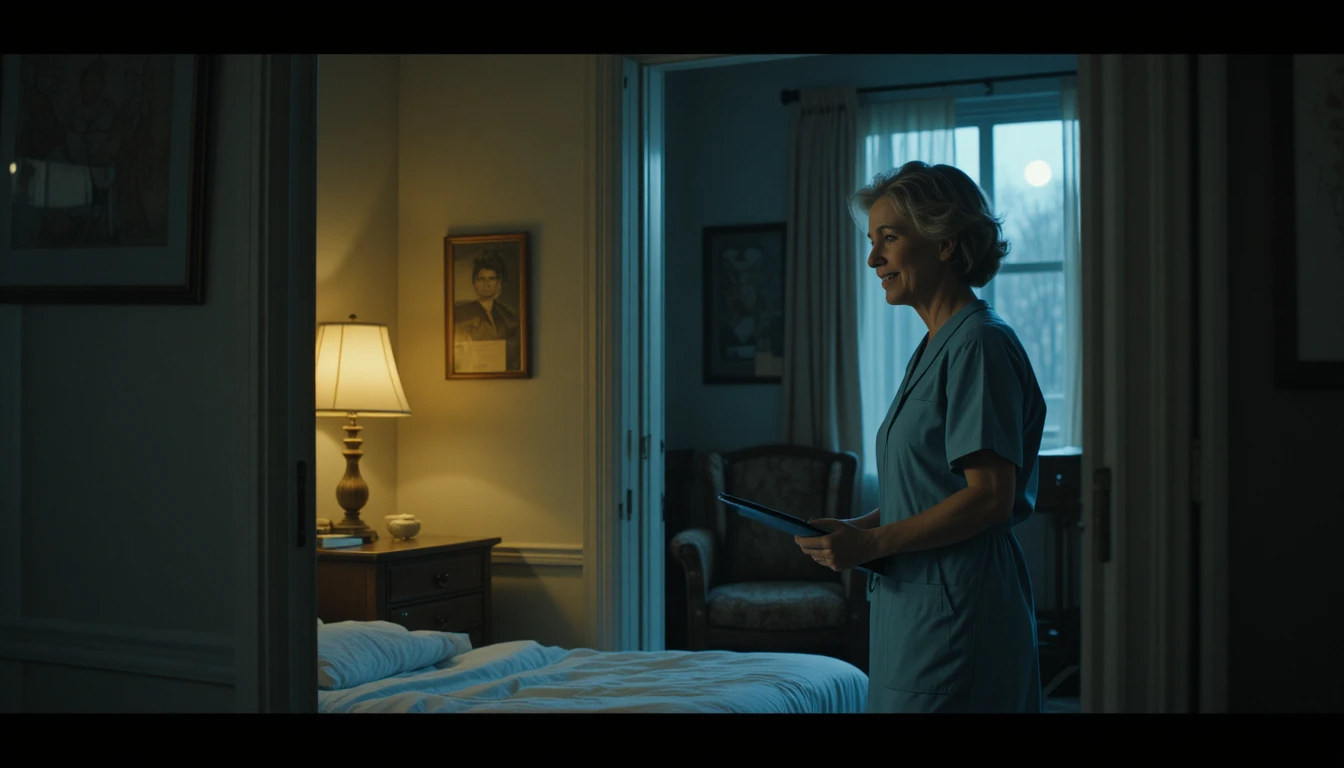
    Congratulations,Your new position is as the nighttime Caregiver at Rosewood Nursing Home, situated just beyond the town limits of Jericho in West Virginia.

    You demonstrated the exact traits they value: genuine empathy, resilience, and strong accountability. This came across clearly in your application. The interview was concise.The interview process was brief and straightforward. The interview was concise. The administrator’s measured look was appraising more than your competence; it was gauging your potential for… acquiescence.

    The offer arrived without delay. Now, holding the letter, the title caregiver rests upon you with a distinct and heavy significance. Your duty is to ensure the residents’ safety and to adhere to the protocols. Most importantly, to Rule Number Six.

    This is no ordinary caregiving post. Rosewood, a majestic but weary structure that seems to swallow the Appalachian dusk, functions by a different set of principles after dark. The rules provided are not mere suggestions; they are the foundation of survival for your shift and, you intuit, for something much more ancient. Consider this your genuine orientation. Here, a caregiver’s understanding is their only true protection.

    Rule No. 1: The Symphony of the Unseen

    The 10 PM shift is mine. As the day staff vanishes with brief, rushed goodbyes, Rosewood’s deep, observant silence takes hold, swallowing all sound. Precisely at 10:30 PM, you commence your initial rounds. Attending to each resident is a caregiver’s primary task. In Room 117, Mrs. Edith is alert, her eyes sharp and fixed on the empty corner. “She lets out a soft laugh. ‘More rain descriptions.’ Her gaze drifts to the empty seat beside her.

    Your instinct to comfort and reorient tugs at you. But the rule is absolute: Ignore it and walk away. This is your essential first lesson. At Rosewood, a caregiver tends to the residents within their own reality, not the one you might impose. You are a keeper of their nightly tranquility, not a judge of their perceptions. You offer a gentle, professional nod and proceed, her solitary dialogue fading behind you. Success here requires mastering selective attention.

    Caregiver
    Caregiver

    Rule No. 2: The Independent Journey

    Later, while documenting at the nurses’ station, a soft, persistent squeak resonates from the east wing. A classic wooden wheelchair, its seat visibly empty, rolls at a constant pace as if guided by an unseen, purposeful force. Every caregiving impulse urges you to stop it—a potential hazard. Yet Rule No. 2 is unambiguous: Do not pursue it, regardless of its destination. You observe, your pulse quickening, as it halts perfectly before the locked library door. It simply… remains. You wrench your focus back to your paperwork. This rule instills the caregiver’s discipline of restraint. Sometimes, ensuring safety means permitting certain events to conclude without intervention.

    Rule No. 3: The Ceiling Above Mrs. Holloway

    Caregiver
    Caregiver

    At a quarter past eleven in the evening, the routine for Room 302 begins. Mrs. Holloway requires her nightly dose. With the focused attention of a dedicated nurse, you arrange the prescribed tablets alongside a fresh glass of cool water. A soft knock, then you enter. She is not resting. She stands at the window, her shape outlined against the dark West Virginia sky. “The dust is so thick up there,” she states casually.

    The rule burns in your thoughts: Do not look up at the ceiling. Eyes forward, you set down the medicine and water. “Your medication is ready, Mrs. Holloway,” you state, voice steady. A subtle, heavy feeling presses down—the distinct weight of being watched. You leave without a glance upward. The rule demands total focus on service. Your role is to give care, not to acknowledge the disturbances in the environment.

    Rule No. 4: The Silent Floor

    After midnight, the atmosphere transforms. Heading to the supply closet on three, you board the elevator. It jolts, the lights sputter, and it stops with a sharp ding. The doors reveal the sixth floor, not the third.The hall is choked with an oppressive dark, packed with spectral shapes hidden under dusty sheets. A biting cold carries the twin smells of mold and slow decay. Rule No. 4 screams in your mind: Do not exit the elevator.

    That level has been closed for decades. Your finger jabs the “Close Door” button repeatedly. The doors seal with torturous delay. This rule is a blunt reminder for a caregiver: recognize the limits of your domain. Entering prohibited spaces, for any reason, jeopardizes your capacity to safeguard those under your active watch.

    Rule No. 5: The Plea You Cannot Answer

    At 12:30 AM, the station phone rings, a shrill intrusion. You answer. Hiss fills the line, then a voice, faint and stretched thin, begs, “Help… the old restroom… first floor… please…” It speaks of the washroom that has been locked and under renovation since your arrival. Your very core as a caregiver yearns to help. But Rule No. 5 is inflexible: Hang up the phone. Do not go. You replace the receiver, the action feeling like a betrayal of conscience. This is the ultimate trial of trust in the established procedures. A caregiver must sometimes accept that the most merciful choice is a calculated refusal to act, lest they become another soul requiring salvation.

    Rule No. 6: The Offering at the Threshold

    Then, 1:00 AM comes. This was the core of our unusual arrangement, explaining the intense questioning in my interview.The required objects—a silver spoon, a water glass, three sugar cubes, a lit candle, and red string—are gathered. I then carefully order them on a small wooden tray. The hall leading to Room 666 seems to stretch, the darkness more profound. You position the tray on the floor before the plain, heavy oak door.

    You knock twice—the sound absurdly sharp in the quiet. Then, you turn and leave. You do not open the door. You do not turn around. You are a caregiver, fulfilling a necessity beyond your understanding. If the candle’s flame, that frail, wavering light, dies before you return to the lit station, the directive is clear: Run. This ultimate rule defines the entire ordeal: execute your duty with exactness, relinquish any command over the result, and recognize when your function transitions from caregiver to a potential recipient of care.

    Caregiver
    Caregiver

    The Core of the Caregiver Vocation at Rosewood

    What does it mean to be a caregiver under such exceptional circumstances? It means your empathy is bounded by unwavering discipline. Your watchfulness extends beyond the residents’ physical needs to the preservation of a delicate, supernatural balance. The abilities you develop here—imperturbable calm, rigorous obedience to protocol, command over your own curiosity and dread—are the extreme enhancements of traits found in all exemplary caregivers. You discover that to care can mean performing a strange rite, that security may hinge on what you consciously overlook, and that the most significant service you can render is safeguarding a brittle, eerie peace.

    So, assume your post, caregiver. The night at Rosewood is lengthy, and its rules are your sole guide. Uphold them with the dedication that secured you this position. Remain calm. Follow the rules. And good luck. The residents, in their own particular way, are relying on you.

    Take the Night Shift: 7 Essential Rules for Surviving Marlene’s Diner

  • Take the Night Shift: 7 Essential Rules for Surviving Marlene’s Diner

    Take the Night Shift: 7 Essential Rules for Surviving Marlene’s Diner

    Congratulations.This document is more than a job offer; it is a gateway to a world unfolding in the gaps between seconds. You are appointed the night shift server at Marlene’s Diner on Highway 9, outside Bangor, Maine, for $12.75 an hour and tips. Be warned: the clientele after midnight often settle their checks with tenders far stranger than cash.

    Your responsibilities appear elementary: offer a warm smile, maintain a steady supply of hot coffee, and obey the established guidelines without deviation. Particular emphasis must be placed on Rule No. 5. This occupation exceeds standard food service; it constitutes a guardianship. This guide provides an informal primer for navigating the unique, off-hours atmosphere of Marlene’s Diner. Here, the coffee is strong, the desserts are sweet, and the late-night crowd demands a specific and watchful approach.

    Understanding Your Workplace: More Than Just a Diner

    Marlene’s Diner is not an ordinary roadside eatery. Under the sun, it functions as a nostalgic, hospitable dining spot for area inhabitants and wayfarers. Yet, the moment you accept the night watch, you are inaugurated as the curator of an interstitial zone—a veritable portal. Highways like Route 9 serve as channels through antiquated, thick forests, regions where narrative and bygone eras are ingrained in the landscape. Your purpose here shifts from mere service to upholding a fragile equilibrium. The regulations are not corporate directives; they are preservation techniques, refined over innumerable overnight tours. They ensure your continued safety and the… tranquility… of those guests who arrive during the world’s quietest hours.Marlene’s Diner

    Marlene's Diner
    Marlene’s Diner

    A Detailed Walkthrough of The Rules: Your Nightly Checklist

    Consider the manual you were provided; it is the foundational scripture for your tenure at Marlene’s Diner.

    Rule No. 1: The Neon Invocation.

    Precisely at 10:00 PM, energize the iconic neon “Open” sign. A critical procedure: you must cycle the power switch twice in succession. The initial ignition is for biological patrons—the cross-country hauler, the sleep-deprived individual, the nomadic duo. The secondary ignition is a deliberate summons.asi spinbot kr ky as ka palarism zero kro 3 version ma do english [It alerts the other constituency that the venue is prepared to accommodate them, contingent upon their peaceful conduct. It reaffirms the diner’s status as a demilitarized zone. Neglecting this binary protocol is a primary and perilous error. Conceptualize it as lighting two distinct lanterns: one for the corporeal, one for the incorporeal.

    Rule No. 2: The Gentleman in the Gray Suit.

    This personage will materialize, consistently selecting the farthest booth. He will order “the special.” Please note: after midnight, there is no defined “special” on any menu. Your prescribed action is to present him with unadulterated black coffee and a serving of lemon meringue pieYou must never acknowledge the tarnished, rust-hued bloom upon his collar. His conduct is of an exquisite, antiquated courtesy. Each visit concludes with a twenty-dollar note secreted beneath the china—a transaction guaranteed solely by your averted eyes. Your deliberate discretion is the actual service he procures. Within these walls, some injuries are timeless, and offering a measure of respect with a slice of pie is a basic tenet.Marlene’s Diner

    Rule No. 3: The Autonomous Jukebox.

    Approximately at the witching hour, the vintage jukebox will initiate operation autonomously. Its musical selection is perpetually the tune “Blue Moon.” This event is not an malfunction. Under no circumstances should you disconnect its power source or express vocal frustration. Allow the plaintive harmony to permeate the space. The fate of the prior server who severed the power cable serves as a sobering legend. She became a permanent fixture within the melody’s lonely verse, internalizing its refrain until she was expunged from the diurnal sphere. The music is a ceremonial act, a necessary discharge of accumulated resonance. Proceed with your duties—refill cups, clean linoleum—and permit the cycle to complete.

    Rule No. 4: The Phantom Payphone.

    Occasional motorists will enter, inquiring after the public telephone near the facilities. Your mandated response is to promptly and preemptively furnish them with the wireless handset stored behind the register. The crimson payphone apparatus is a relic; its receiver is perpetually dusty. It has been inoperative for over three decades. Despite this, it will occasionally produce a ringtone. The sound is metallic and seems to originate from a distance. You are strictly forbidden from answering this call. The connection is not intended for a living operator. Certain channels are optimally left dormant. This ordinance exists to divert the unaware living from accidentally engaging a dead line crackling with residual energy from another stratum.

    Rule No. 5: The 3:03 AM Test.

    This ordinance is the paramount directive at Marlene’s Diner. At exactly 3:03 AM, a soft but unyielding percussion will issue from the rear delivery entrance. A vocal entity, its timbre fluctuating between youthful and aged, will petition for Marlene. You must not open this door. Marlene, the foundational owner, passed from this world a decade ago. Your sole permissible action is to announce firmly, “Sorry, we’re closed!” and then maintain absolute silence and stillness. If the percussive contact ceases, your integrity remains intact. The shift will progress to a peaceful conclusion.

    Should the knocking not cease but instead grow more frantic, your time to act dissolves with each second. You must immediately douse every light source, surrendering the room to absolute blackness, and take refuge behind the sturdy bulk of the oak bar until first light. This is an evaluation of your psychological fortitude. The presence at the ingress does not genuinely seek Marlene; it is probing the resilience of the boundary and your susceptibility. Your scrupulous adherence to the rule buttresses the metaphysical integrity of the diner’s perimeter.

    Marlene's Diner
    Marlene’s Diner

    Skills You’ll Develop: Beyond the Resume

    Service at Marlene’s Diner will instill a distinctive professional toolkit with unexpected future utility. You will gain expertise in hyper-observant acuity, noting environmental details most observers filter out. Your capacity for empathic assessment will deepen as you learn to decode rooms and individuals based on preternatural cues. Emergency response and imperturbability under existential pressure will become second nature. For any subsequent role involving public interaction, hospitality, or even procedural security, the preternatural patience and ceremonial adherence cultivated here will render you exceptional. You are not merely a waitress; you are an intermediary for the nocturnal interval.

    Embracing the Vibe: The Heart of the Night Shift

    The paramount attitude for flourishing at Marlene’s Diner is unconditional acceptance. This is not a house of horrors; it is a junction point. The coffee you brew is an anchor to the mundane. The gentle warmth from the dessert display is a beacon. Your polite, imperturbable demeanor is the keystone preserving an ancient accord. The gratuities left behind—an odd numismatic item, a faded daguerreotype, that perpetually pristine twenty—are tokens of gratitude for your role in an ongoing ritual. You are continuing a covenant initiated by Marlene herself, a proprietor who understood that some travelers require sustenance and a moment of stillness, regardless of the plane from which they embark.

    Therefore, as you fasten your apron this evening at Marlene’s Diner, internalize this: you are the newest sentinel of the liminal. The rules are your instruments. The coffee is your sacrament. Keep it brewing, adhere to every protocol, and you will find this endeavor transcends employment—it is a fundamentally human ministry performed during a subtly inhuman watch.

    The night on Highway 9 is extensive, but you are not without fellowship. Simply let the jukebox complete its rotation, pay no heed to the inactive telephone, and above all else, refuse any entreaty to open the rear door for the one who calls for Marlene. We commend your resolve. You are now integrated into the lineage. Your inaugural watch at Bangor’s most anomalous diner begins now.

    The 7 Unspoken Nightmare Protocols of a Walmart Security Guard ($52/hr)

  • The 7 Unspoken Nightmare Protocols of a Walmart Security Guard ($52/hr)

    The 7 Unspoken Nightmare Protocols of a Walmart Security Guard ($52/hr)

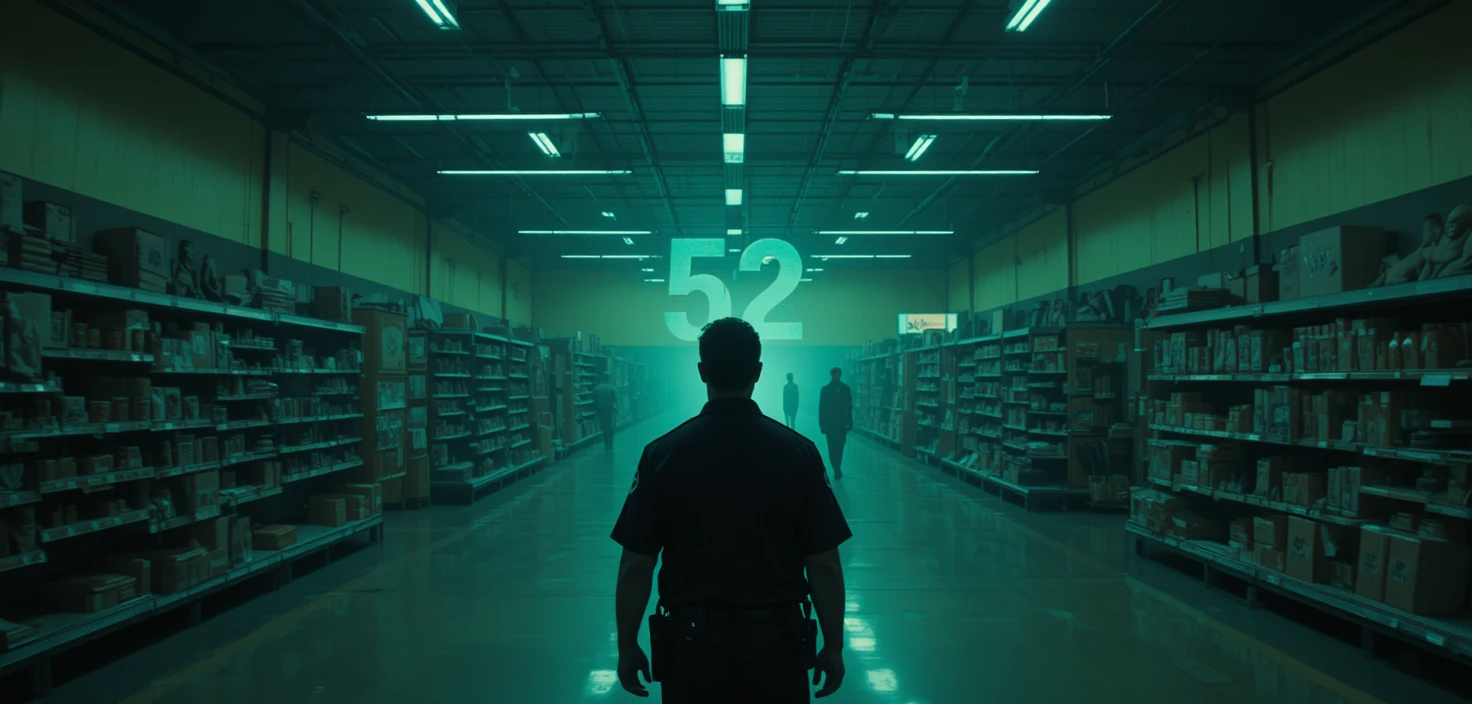
    Congratulations on securing the Walmart Security Guard job. The offer of $52 per hour from 11 PM to 6 AM is very compelling for guarding a closed store. Please be aware that the onboarding for this role is uniquely structured. You have been provided with a set of guidelines that deviate from standard protocol. Do not inquire as to why. Their effectiveness is validated by silent, incident-free shifts. Your personal safety and the store’s integrity during the “quiet hours” hinge on strict compliance. Regard this document as your expanded, unofficial manual, translating those ambiguous points into a fundamental operational philosophy.

    Understanding the Environment: More Than Just an Empty Store

    After closing, a Walmart Security Guard Supercenter becomes a different world. The daytime clamor is replaced by a deep silence, interrupted only by three key sounds: the persistent rumble of cooling systems, the sporadic clicking of automated devices, and the rhythmic movements of maintenance equipment. The scaled-back illumination causes the high storage racks to throw long, dark shapes across the vacant spaces. Note that the automatic doors stay functional for reasons not provided to staff. Your essential equipment includes not only a flashlight and radio but also your attentiveness, self-control, and unwavering dedication to the guidelines.

    This position is not primarily about preventing theft. It is about serving as a nocturnal guardian of balance. The substantial compensation acknowledges not conventional peril, but the psychological resilience needed for vigilant impartiality.

    Protocol 1: The Blurred-Face Customer – The Discipline of Benign Neglect

    The Rule: Should you observe a customer with indistinct facial features moving through the aisles, you must disregard them. Avoid direct observation or interaction. If they inquire about an item’s cost, they have no intention to purchase. Merely note their presence.

    This scenario challenges your core Walmart Security Guard instincts. Standard procedure demands identification and engagement. Here, you must suppress that impulse. The “blurred face” is neither a technical malfunction nor a trick of shadows; it is a defining trait of a particular after-hours phenomenon. Acknowledging them through eye contact or speech is perceived as an unwelcome invitation.

    Walmart Security Guard
    Walmart Security Guard

    Professional Context: The concept of “calculated indifference” is sometimes applied in loss prevention with known, non-aggressive individuals to prevent escalation. This protocol elevates that principle to an absolute. Your focus is observation without engagement. Log the aisle, time, and Behavior in your report, but never descriptive details of the face. Respond to any mumbled price check with a neutral, non-committal sound and continue your rounds. They are not present to shop. They simply exist. Recognize them only peripherally and proceed.

    Protocol 2: The Thermal Anomaly in Frozen Foods – Heeding Sensory Data

    The Rule: The frozen food section maintains a constant低温. If you approach and feel warm air, immediately retreat the way you came without scanning the area. Your perceived location is incorrect.

    This guideline concerns environmental and sensory consistency. The freezer aisle is a bastion of stable climate. An unnatural warmth is a more dependable sign of an issue than a visual or auditory anomaly. The instruction’s strength is its simplicity: do not investigate.

    Safety Analysis: Conventional training teaches you to assess irregularities. This inverts that logic. The “warm freezer” acts as a boundary marker. Attempting to rationalize it (“Perhaps a unit failed?”) risks a shift in your perceptual reality. The statement, “You’re not where you think you are,” is a factual warning in that instant. The appropriate response is a composed, immediate withdrawal. This parallels industrial safety protocols mandating immediate evacuation upon specific alarms. Your chief duty is to maintain your own situational awareness. If compromised, return to a secure anchor point—typically the Walmart Security Guard office.

    Protocol 3: The 2:00 AM Announcement – A Broadcast to Disregard

    The Rule: At approximately 2:00 AM, the public address system may activate, using your name and relaying a message you did not record. Keep your eyes closed until it concludes. Do not listen to the final words.

    2:00 AM represents the lowest point in the circadian rhythm, a time of diminished alertness. The automated system will employ your name. The voice will mimic yours, but the message will be unfamiliar. This is a significant psychological test. The content is meaningless and potentially damaging to your sense of identity.

    Rationale: The protocol directly counters the instinct of self-recognition.We are hardwired to turn when our name is spoken, especially in our own familiar tone. Shutting one’s eyes disrupts this impulse through a dual strategy: sensory withdrawal softens the sound’s magnetic pull, while the lowered eyelids perform a silent, bodily act of resistance. “Do not listen to the ending” is critical. The human mind seeks narrative completion; the ending is designed to captivate. View this as a daily exercise in mindful detachment. Consider it a system purge, not a communication. You are an accidental conduit. Allow the words to pass without retaining them.

    Protocol 4: The Autonomous Checkout – Auditing the Intangible

    The Rule: If a self-checkout terminal activates independently and begins scanning non-visible items, document all details but do not print the receipt. Whatever is transacted cannot be returned.

    This rule merges the ordinary with the inexplicable. Self-checkout stations are focal points of residual activity. An autonomous activation signifies a transaction occurring beyond ordinary perception. Your function transitions from guard to auditor.

    Procedural Focus: The key directive is to record. Note the register number, the pattern of scans (rapid, slow, deliberate?), and the final total. Input this data into the digital log under “Incident – Register Anomaly.” The crucial prohibition is against generating a physical record—the receipt. A receipt finalizes the sale in our domain. The items, irrespective of their nature, would then be logged as “sold” from inventory, creating an irreconcilable phantom loss. You are to witness the event, log it as data, but never validate it with a paper trail. This is loss prevention in its most abstract form: preventing the loss of non-physical stock.

    Protocol 5: The Sentinels in Apparel – Interpreting a Silent Signal

    The Rule: If, during your shift conclusion, you observe all mannequins oriented in the same direction, it signifies an approach. Depart without running and do not display fear.

    The mannequins are your static counterparts. Throughout the night, they face random directions. A unified alignment is not a joke; it is collective attention fixed on a single point. They function as indicators.

    Walmart Security Guard
    Walmart Security Guard

    Professional Demeanor: This protocol evaluates your composure under extreme pressure. “Leave without running” avoids triggering pursuit dynamics. “Do not show fear” avoids emitting the energy of a target. Your walk to the time clock, punching out, and exiting via the staff door must be performed with the routine monotony of any other night. You may move swiftly, but never with panic. The approaching presence may be attracted to disturbance. A calm, orderly exit denies it a focal point. You are merely a worker concluding a shift. Nothing more.

    Conclusion: The Professionalism of the Unseen

    Your $52-per-hour role at Walmart Security Guard is, fundamentally, an advanced course in maintaining professionalism under atypical parameters. Each protocol is engineered to preserve a boundary between the daytime operational logic and the distinct principles governing the night. This is not a tale of horror; it is a job with specific, unusual conditions.

    Triumph in this position is quantified by an uneventful log entry at 6:05 AM. It demands perceiving the strange not as a threat to confront, but as a process to manage with detached accuracy. You are not a protagonist; you are a custodian. You disregard the blurred, withdraw from the warm, silence your own voice, audit the spectral transactions, and obey the silent sentinels. You follow the protocol without deviation. In this manner, you secure your premium wage and guarantee that when the doors open for the day staff, the store is not only secure but fundamentally stable, prepared to re-enter the world of light, shopping carts, and customers with clearly defined faces.

    Post-Mortem Supervisor: 5 Essential Rules for a Perfect, Uneventful Shift

  • Post-Mortem Supervisor: 5 Essential Rules for a Perfect, Uneventful Shift

    Post-Mortem Supervisor: 5 Essential Rules for a Perfect, Uneventful Shift

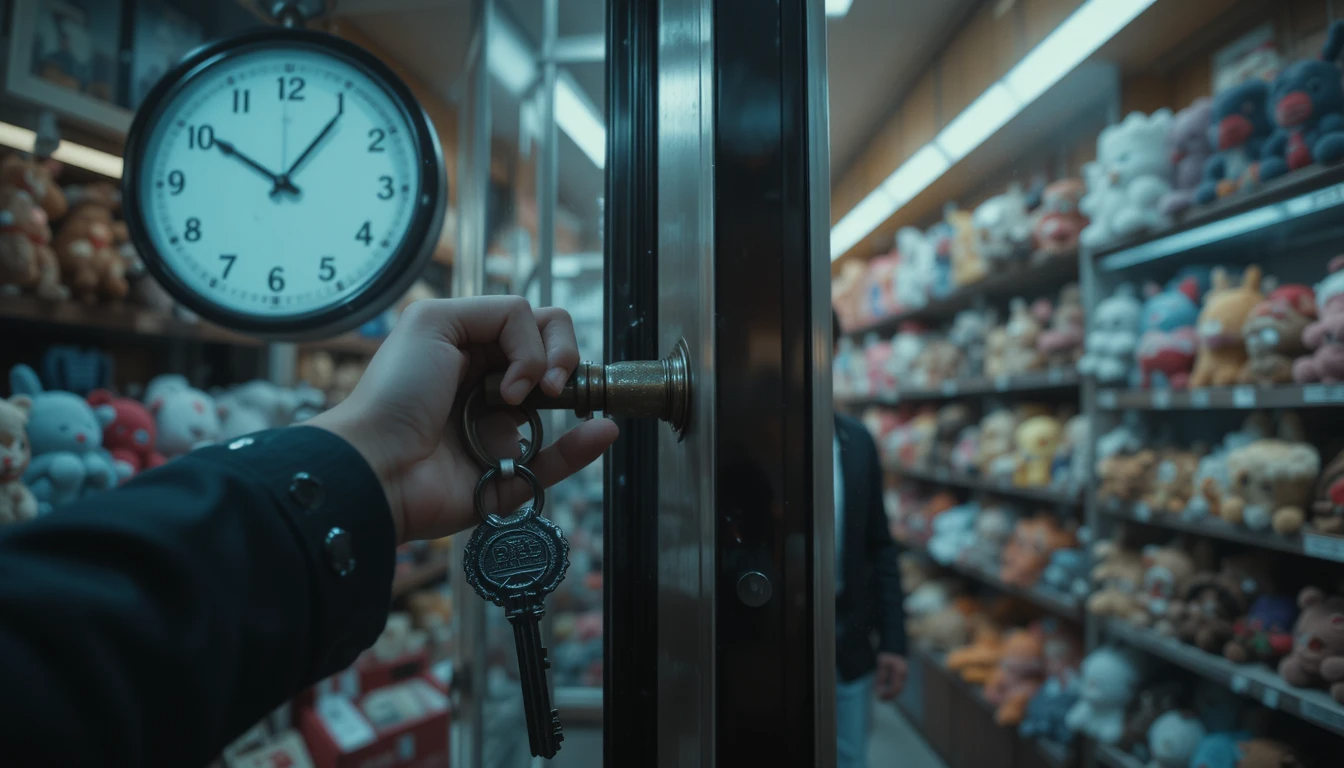
    Congratulation;The envelope you hold is more than an employment contract; it is a passkey. Specifically, a passkey to the Saint Ivy’s Children’s Memorial Wing, and to the playroom you will open each night from midnight until dawn. Your designation: Post-Mortem Supervisor. The pay—$24 per hour plus additional compensation for “unexpected activity”—is substantial, but it is not merely a salary.

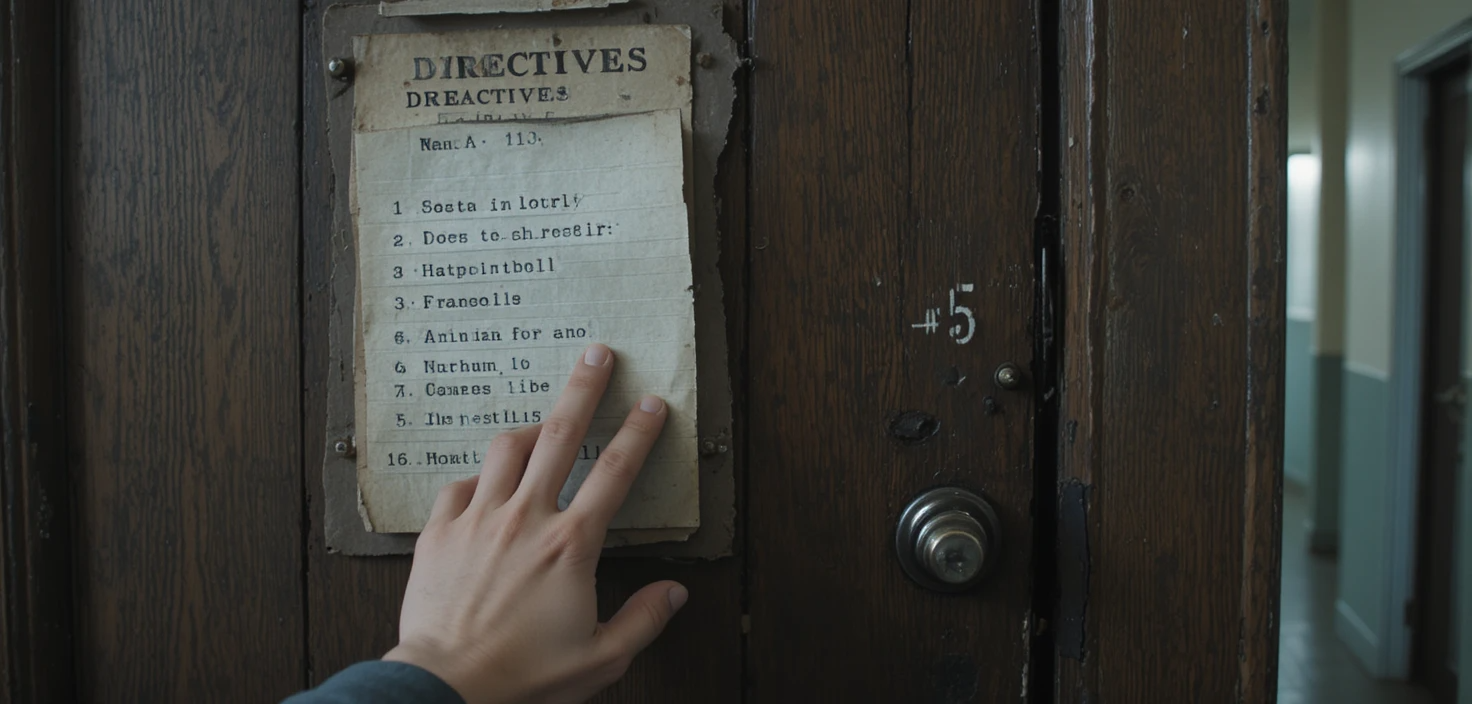
    It is an agreement.On the surface, the duties are simple—tidying playthings, keeping the room warm, heeding the five door-mounted directives. Yet this routine transcends simple procedure. It is a ritual of vigilance, crucial for your preservation and for upholding a precarious harmony in a space where recollection, self, and simulation are forever intertwined.

    This manual is unofficial; Saint Ivy’s does not issue one. It is a collection of understandings, passed quietly from one supervisor to the next, to help you manage the deep obligation you have undertaken. The central concept of your new role, the bedrock of your nightly work, is your precise title: Post-Mortem Supervisor. You are not a custodian or a conventional security guard.

    You are a Post-Mortem Supervisor in the fullest meaning: one who monitors, who upholds structure, and who offers a quiet, constant anchor in a domain that functions by its own peculiar logic. You will repeat this term, “Post-Mortem Supervisor,” to yourself frequently. It will center you when the warmth fluctuates without warning or when the darkness seems to take on unusual shapes.

    Your central responsibilities seem simple, yet each is laden with meaning. To put a toy away is to act as a curator of childhood. Each stuffed companion, each wooden block, each miniature saucer is not mere clutter, but a sacred vessel preserving a fleeting memory. To arrange them properly is a gesture of honor. It communicates, “You are not forgotten. Your belongings are protected.” Maintaining the room’s warmth is your most physical task.

    Post-Mortem Supervisor
    Post-Mortem Supervisor

    The heat is not only for coziness; it is the vitality of the space, the shield against the numbness of grief and the icy draft that invades when protocols are ignored. A sudden chill is your earliest and most consistent sign that the atmosphere is becoming agitated.

    Now, we address the rules. They are your essential instructions. Do not doubt their peculiar nature; comprehend their intent.

    Directive 1: Invariably unseal the playroom from within. Should the door already be unlatched upon your arrival, shut it, tally to five, and rap twice. An occupant within requires the formality.

    This rule defines the structure and sacredness of the area. By unsealing it from within, you figuratively cross into their realm; you are a visitor in an autonomous zone. Discovering the door open is an uncommon but meaningful occurrence. It is not a welcome, but a diversion or an examination. Closing it re-establishes the limit. The five-second count is a pause, an interval for any residual presence to become calm. The two raps are a formal declaration of your entry, a politeness shown to invisible proprietors. It recognizes their existence before you enter.

    Directive 2: Should a plaything relocate independently, retrieve it and position it correctly on the shelf. Do not observe it for an extended period. Its observation of you becomes more intense.

    This is where your additional compensation provision becomes applicable. “Unexpected activity” frequently originates here. The motion is an appeal for notice, a flicker of intention. Your reaction must be routine and deliberate: collect and store. Do not wonder. Do not scrutinize. The caution about observation is paramount. Your attention grants it strength, solidifies its reality in a manner that can become persistent and directed—toward you. You are a Post-Mortem Supervisor, not an onlooker. By responding without pause, you confirm that such events fall within the standard scope of your duty, something to be placidly addressed.

    Directive 3: If the sound of children’s amusement arises from behind you, grin and acknowledge it even if the area is vacant. They dislike being disregarded, and the climate cools when they are displeased.

    This rule concerns recognizing the imperceptible. The laughter is an offering, an indicator of a tranquil period. To dismiss it is profound discourtesy in this setting. The smile and nod are a global signal that states, “I perceive you. Your happiness is accepted.” The link between their mood and the room’s temperature is immediate. A quick icing on the panes, your breath condensing in air—these are critical warnings. It signifies a failure in some basic respect, and the surroundings are turning adversarial. As a proficient Post-Mortem Supervisor, sustaining that ambient heat through considerate engagement is the majority of the work.

    Directive 4: Should a shadow of juvenile proportions manifest beneath the activity table, present it a drawing tool and withdraw. If it accepts the tool, all is well. If it declines, activate the projection lamp. This redirects its focus.

    Shadows are not the same as laughter. They are more concentrated, more tangible. The shadow beneath the table is an inhabitant that has opted to appear in a semi-solid state. The offering of a drawing tool is a bid to create, to direct energy into something benign. It is an accord. Acceptance is Favorable. Refusal signals stubbornness or playful trouble. The projection lamp provides not just illumination, but a tumult of hues and forms. It overwhelms the shadow’s perception, prompting it to scatter or become preoccupied. It is a pacific method to neutralize a potential concentration of energy.

    Post-Mortem Supervisor
    Post-Mortem Supervisor

    Directive 5: At 3:00 AM precisely, the rocking horse will commence motion independently and a vocal query will arise: “Can you play with us now?” Reply gently, “Soon.” Should you utter a refusal, the horse halts its rocking and all other things commence.

    This is the foundation of your shift, the nocturnal ceremony. The true trial of the deepest night. 3:00 AM is the night’s lowest point, a moment of powerful force. The rocking horse is the room’s oscillator, its timekeeper. The question is not a genuine request; it is an appeal for bond, a verification of your pledge to maintain the continuity. Your response, “Soon,” is a tender, honest deferral. It signifies “not at this moment, but this place will endure, and others will follow.” It confirms succession. To state “No” is an absolute denial, a withdrawal of expectation.

    The stopping of the horse’s movement is the quieting of a pulse. And when the pulse ceases, “all other things commence.” This is the implied “hazard.” The arranged toys may stir together, the warmth may dive, shadows may separate from their sources, and amusement may shift to distress. You have violated the agreement.

    As the Post-Mortem Supervisor, your efficacy is judged not by chores finished, but by the uninterrupted flow of time. A prosperous shift is a tedious one. You will depart at daybreak, having sustained the warmth, honored the directives, and safeguarded the fragile tranquility of Saint Ivy’s.

    Fundamentally, your position is that of a nocturnal sentinel overseeing a gallery of remembrance, tasked with protecting lingering echoes. This duty demands a distinct combination of fortitude, perceptive understanding, and steadfast devotion to established procedures. It is not suited for all. But for those who can attend to the quiet, honor the invisible, and grasp that “soon” is a form of eternity, it is beyond mere occupation. It is a solemn, silent duty. Good fortune. Your watch starts tonight.

    5 Harsh Truths For Aspiring Makeup Artist (Life-Changing)

  • 5 Harsh Truths For Aspiring Makeup Artist (Life-Changing)

    5 Harsh Truths For Aspiring Makeup Artist (Life-Changing)

    “Congratulations,” it begins, an ordinary word launching you into an utterly extraordinary reality.Your new role: Makeup Artist at The Last Touch Salon. You were summoned, not hired. The salon dwells in unbroken darkness, its doors parting only past midnight.Bordering the land is Hollow Hill Cemetery, a terrain endowed with a subterranean whisper, a quietude that rises from the ground. The interior air is stamped with a familiar duality of fragrances—the sweet, desiccated brittleness of aged roses against the cold, decisive sharpness of embalming fluid.

    The clients arrive in silence, wrapped in silks of profound shadow. They await your craft. Your unwavering hands. Your creative eye. Your power to grant them a fragment of borrowed elegance for their final performance.

    This represents both the zenith and the contradiction of a Makeup Artist profession. The surface is singular, the demands exact, and the regulations are not suggestions—they are vital procedures for operating within the delicate intersection of Honor and Truth. Should the burden of this nocturnal calling feel excessive, the summons provides an unusual escape: you may transfer it to an acquaintance. Yet, you cannot merely refuse.

    It is murmured that the mirrors here have already witnessed your aptitude, and they seldom release a visage from memory. Particularly because, as you will observe, they reflect no countenances whatsoever—solely vacant impressions of the chamber at your back.

    Your duty as Makeup Artist at The Last Touch is a practice in exquisite discipline and deep comprehension. You are not simply administering cosmetics; you are conducting a ceremony of reinstatement, of tender commemoration. The protocols are your syllabus, inscribed in the soundless dialect of your new environment.

    Protocol 1: Never address a client by name.

    This is the foremost and most solemn principle. In the exterior realm, a name is a politeness. Here, it is an activator. The departed hold dear the resonance of their names, a tremor from a reality they have departed. To utter it is to chance fastening them to your vicinity, to encourage a closeness that may obscure the crucial separation between artist and patron. Labor in deferential quiet, interacting through soft motions and the dialect of your implements.

    Makeup Artist
    Makeup Artist

    Protocol 2: Maintain one lit candle beside your mirror.

    Your chief illumination is the sterile, cool radiance of vanity bulbs, yet the candle is your protector. Its constant flame gauges the tranquility of the atmosphere. Should it waver, ignore drafts—an entity at your rear is observing. Do not rotate. Do not fear. Merely halt your task, direct your eyes to your kit, and emit a deep, melody-less hum. The observing entity is frequently just inquisitive, lured by the vitality of creation. The candle’s motion is your preliminary alert, a non-verbal signal every professional makeup artist in this establishment must obey to preserve the concentrated, calm setting the clients need.

    Protocol 3: Consistently employ cool shades.

    Your spectrum is one of moonlit murmurs: ash browns, slate grays, icy lilacs, blues possessing the cold of abyssal water, and whites reminiscent of ecclesiastical stone. Warm hues—the lively corals, bright golds, and peachy tints—are absolutely prohibited. They animate tissue. Your objective is not the mimicry of life, but the exquisite glorification of repose.

    A rosy blush could provoke a recollection of blood flowing to cheeks, a feeling that resides in history. Your prowess as a makeup artist is demonstrated within this constraint; you must craft breathtaking, otherworldly allure utilizing solely the palette of frost and dusk.

    Protocol 4: Should a client’s complexion adopt a gray tone or begin to deteriorate, retreat.

    They are recollecting their final moment. Even for the most experienced Makeup Artist, this challenges composure. The alteration is not a disapproval of your craft, but a slip in theirs—a brief reversion to the fact of their demise. It is an intimate instant, and your function is to provide them solitude. Withdraw from the seat, turn courteously to arrange your tools, and permit them the respect of their recollection. The incident will cease, and the mute, enduring form will revert to calm, ready for your artistry again.

    Protocol 5: When the sanctuary bell sounds 4 times, secure your kit and exit.

    Avoid gazing into the mirrors. Timeliness is security. The mystical hour is distant; 4 AM is the threshold between night and an alternate state. The task must conclude. As the ultimate chime dissipates, you must fasten your palette, shut your powders, and leave without looking back. The mirrors in The Last Touch Salon are curators.

    In the stillness following your departure, they do not mirror void. Lore claims they relish the residual impression of the living, retaining a fragment of your likeness for future contemplation. A professional makeup artist comprehends that the instruments of the vocation—mirrors included—must be regarded, and occasionally, that entails understanding when to sever connection with them.

    Makeup Artist
    Makeup Artist

    Your remuneration appears without lapse.

    Wan envelopes, fastened with a droplet of crimson wax as rich as aged wine, materialize at your threshold under the new moon. Within lies neither tangible currency nor electronic deposit, but a form of worth feeling both archaic and intensely private—a scarce pearl, a strand of silver-gilded hair braided into a loop, an impeccably conserved, fragrance-free nocturnal blossom. It is compensation for a vocation existing beyond standard frameworks.

    To be the makeup artist at The Last Touch Salon is to grasp beauty’s ultimate purpose: it is a concluding offering, an enduring trace of respect.A makeup artist’s most profound work occurs where the skin is most delicate and the desire for beauty is most powerful. Each application is a silent, compassionate gesture.
    Each arranged lash, each impeccably shaded lid on a shut eye, is a verse in color. You are an artist for those who traverse the curtain, providing them one final instance of perceptible elegance before they recede into quietude.

    The salon anticipates your skill.

    Your kit, you will discover, is already supplied with shades you have never before encountered. The seat is unoccupied, the candle is unused. Recall the protocols, rely on your hands, and recognize that here, beauty is not an indulgence—it is an essential, ultimate benevolence. Fortune to you, artist. May your hand remain constant, and may you never detect your name sighed from the darkness within the mirror’s vacant pane.

    The domain of a Makeup Artist is expansive, yet no appointment is more singular, more demanding, or more deeply fulfilling, than this. You are welcomed to The Last Touch. Your initial client is now approaching, a soft shuffle of silk at the entrance. Inhale steadily. Ignite the candle. And commence your craft.

    The 5 Deadly Rules of the Silverlight Movie Theater Job

  • Night Shift at LA Bubu Store: 10 Rules for Survival & Pay

    Night Shift at LA Bubu Store: 10 Rules for Survival & Pay

    A nondescript letter sealed your destiny. “We are pleased to inform you that you have been assigned to the Night Shift at the LA Bubu Store.” Were you enticed by the unmatched wage for seemingly simple overnight duties? Or does a hazy, disturbing gap linger in your recollection of ever applying? The motive is irrelevant at this point. You have arrived, the solitary guardian of a plaything emporium that awakens only in the dead of night.

    The LA Bubu Store shatters every convention of standard commerce. It exists in a space where innocent fun intersects with the profoundly eerie, and concealed behind the welcoming, soft-toy front is a foundation of sheer horror. This role transcends a mere job; it is an appraisal of your psychological resilience and your core existence.

    The overseer, a skeletal form who interacted exclusively using handwritten notes, provided you with a vital set of guidelines. “Engrave these into your mind,” they croaked, their tone like gravel shifting. “Your forerunner neglected this duty.” The sheet outlined ten uncompromising regulations. Obey them, and you will exit at daybreak financially rewarded and mentally sound. Defy a single one, and the note grimly finished with, “…your soul remains here forever.”

    Let this serve as your ultimate reference. We will journey through your debut, harrowing night at the LA Bubu Store as one.

    Regulation 1: The Precise Moment of Sealing

    “Lock the entrance doors at 12:00 AM, not before, not after.”

    Your duty commences at 11:45 PM. The venue looks harmlessly typical, its aisles packed with the company’s iconic figure: the Labooboo.Their features are unnervingly arresting, defined by vast, liquid-dark eyes and stitched, immutable grins. As midnight approaches, a profound sense of foreboding may compel you to secure every lock in advance, erecting a desperate fortress against the encroaching peculiarity.You have to reject this compulsion. The regulations are final. On the flip side, a strange, irresistible procrastination may seize you at the final tick, an intuition that an anticipated guest is due. Oppose this sensation with all your might.

    LA Bubu Store
    LA Bubu Store

    The very second the clock displays 12:00 AM, turn the key. The moment the lock mechanism engages, the ambient quality inside the LA Bubu Store will shift. It turns heavier, distinctly colder. The vibrant, happy shades of the decor will appear to deepen, leaning toward the grotesque. You have successfully cleared your first hurdle. The authentic darkness has now commenced.

    Regulation 2: The Refusal to Engage

    “If a Labooboo toy blinks at you, look away immediately. Do not blink back. If you do, it will follow you home.”

    This stands as the most commonly broken, and most treacherously straightforward, decree. Approximately at 12:30 AM, while you are occupied with arranging or cleaning, you will sense it from the edge of your sight. One specific Labooboo, resting peacefully amongst its copies, will purposefully shut and then reopen its eyes. This is real.

    Avoid any visual connection. On no account should you return the gesture. The sole permissible action is to swiftly shift your attention to the floor or the overhead lights. Diverting your look is a strong repudiation of the anomalous occurrence. Mimicking the blink is a quiet agreement, a mute “I see you.” And once you offer that acknowledgment, the LA Bubu Store loses its power over it. Past individuals who erred here mentioned finding a specific Labooboo positioned on their doorstep by morning. They disappeared completely soon after.

    Regulation 3: The Unobserved Client

    “At 1:00 AM, you’ll hear footsteps between the aisles. If you see a shadow moving, pretend you didn’t.”

    Promptly at 1:00 AM, the auditory phenomena will start. It is the unmistakable rhythm of slight, scraping footfalls meandering through the lanes of cuddly toys. Your task is to maintain a facade of routine. You might utter a polite, “I’m here if you require any help!” but you are forbidden from seeking the origin.

    The genuine hazard surfaces if you detect a visual distortion. A stretched, twisted silhouette slinking over the flooring from an adjacent row, contradicting the light sources’ behavior. Your survival instinct will order you to scrutinize the form. You must overpower this desire. If the shadow manifests, quickly immerse yourself in a trivial task, murmuring a nonsensical tune under your breath. You observed nothing. The instant you validate the shadow’s presence, it will validate yours. And it loathes being noticed.

    Regulation 4: The Restricted Product
    “If a customer enters and asks for the ‘special LA Bubu Store,’ say we are out of stock. Do not, under any circumstance, check the back room. The last employee who did never came out.”

    Around 2:00 AM, the entrance chime will sound, heralding the night’s initial physical visitor. They will appear… average. Alarmingly average. They will peruse for a short while before approaching the checkout and murmuring a request for the “special Labooboo.”

    This is a decisive crossroads. Your service industry conditioning will urge you to verify stock, to assist the shopper. You must override this programming. Your only retort is a robotic, memorized, “I regret to inform you, we do not have that in our inventory.” Offer no excuses. Do not propose a future reservation. The individual may plead, their eyes full of despair, or they might rage. Do not yield.

    The storage area of the LA Bubu Store is not for keeping goods. It is an entrance. The “special Labooboo” is not an item; it is a notion, a trigger. The prior attendant, a woman named Chloe, was convinced she heard a familiar melody emanating from behind that door. She made the error of turning the knob. The security recording captured her glancing in, her expression turning to bewilderment, before something invisible and powerful dragged her through the opening. The door closed. She did not return.

    Regulation 5: The Lighting Anomaly

    “If the lights flicker, stay still. Do not move until everything goes dark again.”

    The ceiling lights will intermittently falter and fade. This is not a technical failure; it is a spectral reboot. When the stuttering illumination begins, your entire body will instinctively want to recoil, to find shelter, to change position.

    Under the pulsating glare, your movement generates residual phantoms. And in this specific location, those phantoms can gain independence. They can manifest physically. If you dash while the lights strobe, you could come face-to-face with a replica of yourself stationed at the corridor’s conclusion when full light returns, its agenda unknown. Hence, you must become motionless. Do not inhale. Stay utterly static until the ultimate, comprehensive darkness envelops you. Only within that brief period of total obscurity may you shift. The illumination will invariably return.

    Regulation 6: The Vocal Assault

    “At 3:00 AM, the plush toys may start whispering your name. Do not answer. Do not listen. Cover your ears until the whispers stop.”

    The most hazardous period at the LA Bubu Store is 3:00 AM. This is when the separation between dimensions weakens. It originates as a gentle, shuffling sound. Then, it morphs into a collection of muted utterances. They do not speak random syllables. They are summoning you.

    The voices will be lilting, enticing, and deeply invasive. They will vow rewards, beckon you closer, and appeal for your intervention. To reply is to forfeit a portion of your individuality, a link to your very spirit. Do not communicate. The moment the vocalizations start, seal your ears with your palms. You might still perceive them, dull and far-off, but the deliberate act of obstruction is a significant ceremonial denial. Recite a poem to yourself if needed. This episode generally extends for ten unbearable minutes before stopping suddenly.

    Regulation 7: The Independent Treasury

    The sound of the cash register opening by itself is your cue. Shut your eyes immediately, count slowly to ten, and hope with all your might that you will hear it slide shut again.

    The archaic, hand-operated cash machine is an aware object. You could be studying guidelines or merely struggling to stay conscious when you catch the characteristic RING! The money tray will slide out autonomously.

    This is a fiscal dealing outside your jurisdiction. Do not try to glimpse what is being added or removed. Shut your eyes tightly without delay. Count to ten methodically in your thoughts. The noise of the drawer clattering shut is your cue to reopen them. It is hypothesized that the establishment is repaying a debt to a being from another plane, and onlookers are included in the bargain.

    Regulation 8: The Illusory Entrance

    “4:00 AM. If the door behind the counter opens on its own, do not look. Ignore every sound. They are not real.”

    This is not the storage door. This is a compact, nameless passage located behind the main counter. At 4:00 AM exactly, you might detect its mechanism softly disengaging. It will swing ajar to show a chasm of nothingness.

    From this vacuum, you could detect the cry of a close friend in pain. You could detect the merry ambiance of a gathering. You could detect your superior announcing an early dismissal. It is complete deception, a mental trick crafted to prey on your weaknesses. Ignore it utterly. Focus on sanitizing the surface, on arranging documents. Refuse the abyss your curiosity.

    Regulation 9: The Final Sentinel

    “If you see a Labooboo standing in front of the exit, turn off the lights.”

    As daybreak approaches, the last barriers appear. Sometimes, a LA Bubu Store will relocate, appearing squarely in front of the primary exit. It will hold its ground, utterly immobile, obstructing your departure.

    LA Bubu Store
    LA Bubu Store

    Physical removal is not an option. The remedy is contrary to logic. Do not add more luminosity to the scene. Instead, find the central power panel and immerse the whole LA Bubu Store in utter gloom. Within the absolute absence of light, you will hear a gentle, accepting sigh. After a full half-minute, reactivate the electricity. The doorway will be clear. The sentinel dwells in obscurity and rejects direct inspection; killing the lights is a gesture of deference it demands.

    Regulation 10: The Contrition Protocol

    When you break a rule, say aloud, “I admit my fault and it will not be repeated,” while hoping for their forgiveness.
    You are imperfect. The stress is monumental. Perhaps you unintentionally locked eyes with a LA Bubu Store for a moment too long. Maybe an unexpected crash made you stumble during an outage. The rules are inflexible, but a slender opportunity for mercy is built-in.

    The instant you comprehend your transgression, halt everything. Plant your feet, announce to the vacant space, and declare the phrase with authentic regret: “I acknowledge my mistake. It won’t happen again.”

    This utterance is a protective charm. It proves you grasp the severity of the situation. It might not absolve a grave error, but for minor lapses, it can calm the restless energies. You might feel an abrupt coldness or catch a distant, derisive hiss, but you will probably have earned a pardon. Use it judiciously.

    Concluding Advice: Lasting Until Sunrise

    The nocturnal vigil at the LA Bubu Store is a gauntlet of cerebral stamina. Every regulation is a preservative rite,a segment of procedural lore intended to insulate you from the site’s inherent occupants.This compendium is your key. Learn it. Rely on it.

    When the first glow of morning eventually streams through the panes, the smothering fear will dissipate. The outlet will revert to its benign daily character. At 6:00 AM, you will unbolt the door and return to the rational, commonplace realm.

    You will be fatigued, but you will be unscathed. And you will receive your earnings. Remember, the LA Bubu Store is constantly recruiting. And it remembers every survivor indefinitely. Be ready for your next assignment.

    Secure 1of5 Haunting Hollow Creek Airport Security Job Now