Blog

  • Your 6-Figure Night Job at Netflix’s Secret Archive Has 1 Hidden Danger

    Your 6-Figure Night Job at Netflix’s Secret Archive Has 1 Hidden Danger

    Congratulations, You’re Hired! Welcome to the Netflix’s Secret Archive.The envelope was heavy, its thick, currency-like paper promising significance. No return address. Inside, a single sheet of the same costly stock bore a message that sent a jolt through me: a formal offer for the position of “Nocturnal Archival Specialist” at Netflix’s Secret Archive.I was sure I’d never applied. The job was an abstract idea given form, a role that felt both familiar and impossible. Though it was with Netflix’s Secret Archive, my duties would not place me in Los Gatos.

    The work location was a single, cryptic line: “Beneath Green Hollow.” The hours, from 10 PM to 6 AM, promised a life of reversed rhythms. The salary was a figure that made me look twice, a number that silenced immediate questions. But one clause, printed in stark, bold letters, served as a cold anchor to reality: “Strict adherence to the provided operational protocol is a non-negotiable condition of your employment, your safety, and your severance.”

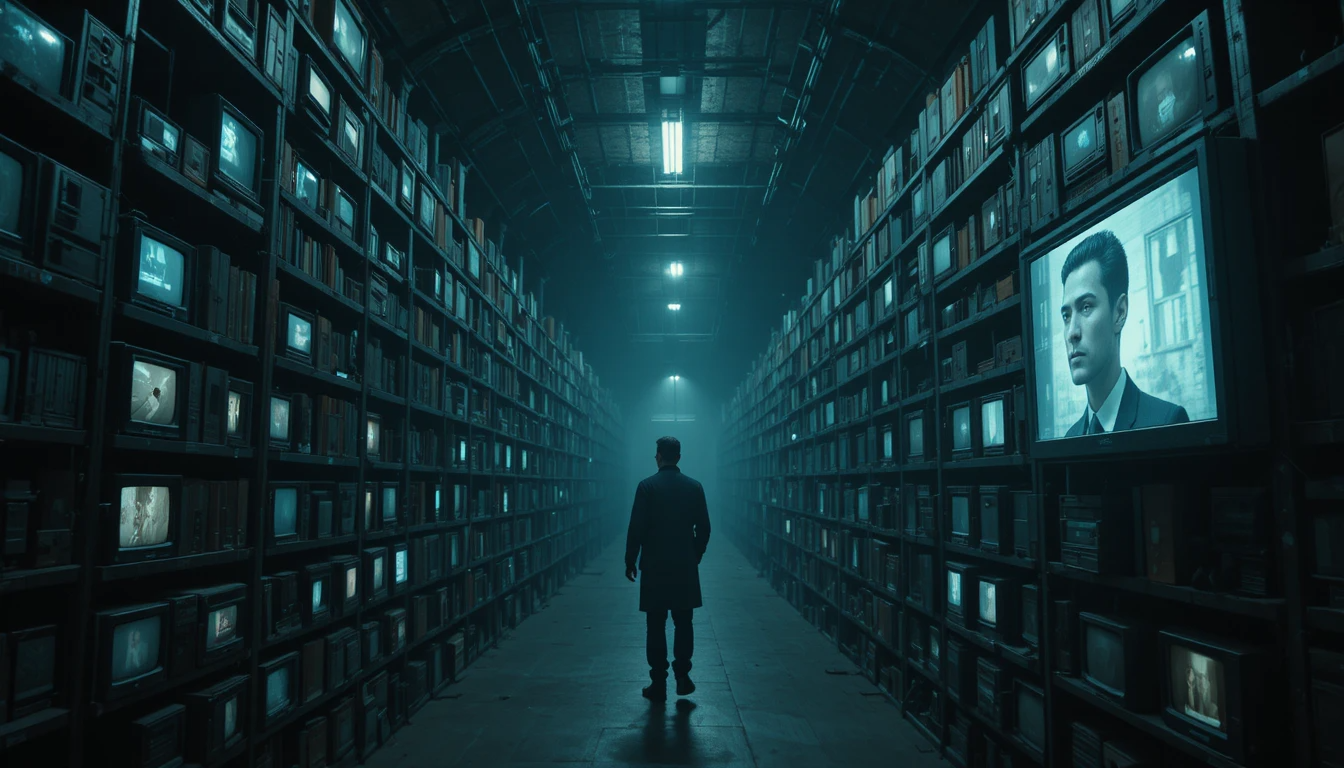
    You accepted. Before you, a formidable blast door is embedded in the fog-shrouded hill. The key rests heavy in your palm. You are about to enter Netflix’s Secret Archive most guarded secret: its physical archive. Here lies the central contradiction of this streaming giant: its most secure facility contains no servers or digital code. The building is a sanctuary for analog antiquities.

    Its climate-controlled aisles are a final resting place for the delicate, physical vessels of the past—spools of film, reels of magnetic tape, and laser discs—preserving the very media forms their business model made obsolete. Your tasks seem simple: catalogue tapes, update records, and check equipment. Most of the collection is routine, but the orientation packet hinted at the truth. According to the warning, a handful of sound files were missing from all directories.

    They were mere echoes in the system’s code, archival aberrations that were designed to remain silent forever.Your survival depends on following the rules. Remember them. Your life may depend on it.

    The Heart of the Digital Beast: Why a Physical Archive?

    While cloud storage and global CDNs define the modern era, Netflix’s Secret Archive use of a physical, underground archive seems oddly out of place. This strategy diverges from rivals like Disney+, Amazon Prime Video, and HBO Max, all of which utilize vast, distributed digital libraries for their content. So why does Netflix’s Secret Archive maintain this relic?

    Netflix's Secret Archive
    Netflix’s Secret Archive

    The unofficial theory among the few who know of its existence is that this archive, known internally as “The Vault” or Netflix’s Secret Archive, is a containment facility. It’s where they store acquired libraries from defunct studios, controversial content, experimental films that breached ethical boundaries, and, most importantly, the “Irreconcilables”—tapes and reels that defy digital conversion. These are the artifacts that corrupt when scanned, that contain metadata pointing to non-existent films, or that, as your rulebook implies, exhibit properties that challenge reality itself. This archive isn’t just about preservation; it’s about quarantine.

    Rule No. 1: When the Screen Looks Back – The Peril of Direct Address

    “If a character on screen ever seems to make direct eye contact, and speaks your name shut down the equipment immediately. Do not finish the scene, do not write it down and never acknowledge what you heard. Leave the area for 10 minutes before returning.”

    This is the first and most critical rule.According to film theory, “direct address” describes the moment an on-screen character looks at and talks directly to the audience, breaking the invisible barrier. This is a strategy utilized by figures spanning centuries, from the playwright Shakespeare to the modern politician Frank Underwood. Yet, deep within Netflix’s Secret Archive after dark, this act is not done for style. It is an intrusion.

    The characters in these anomalous tapes are not simply “aware.” They possess a conscious recognition of your unique presence within the confines of that specific space and moment. The utterance of your name serves to forge a relational bridge, connecting their sphere of existence directly to yours. Shutting down the equipment severs that bridge before it can be solidified. Finishing the scene could allow them to fully cross over. Do not write it down because the act of documentation is a form of acknowledgment, and acknowledgment gives them power. The ten-minute waiting period is a “cool-down” phase, allowing the residual energy of the event to dissipate. This rule is your primary defense against becoming a character in someone else’s story.

    Rule No. 2: The Unseen Horror – Tapes That Play Only Sound

    “If a tape begins to play sound without showing any picture, stop listening at once. Do not rewind or fast forward the reel. Remove it carefully, Mark it as restricted and return it to the locked cabinet. Never attempt to hear it again.”

    In the world of archival, a tape with audio but no video is a common technical fault. But not here. The sounds on these restricted reels are not corrupted audio tracks of known films. They are unique, organic, and deeply wrong. Archivists have logged inexplicable events: dead languages whispered back to life, the disembodied sound of breathing, and a child’s voice calmly working through higher-level mathematics in the deep silence.

    The prohibition against rewinding or fast-forwarding is crucial. These actions are a form of interaction.The audio recording is dangerously manipulative. Interaction with the device triggers a two-way psychological war; while you alter a subject’s timeline, your own reality becomes susceptible to manipulation. The prohibition against repeat listening points to its addictive and mentally destructive nature. The audio imprints itself on the subconscious, creating involuntary replay loops. For safe storage, it is held in a sound-proofed cabinet designed to neutralize its threat. Rumor suggests this technology was developed in a secret pact between rival corporations, a rare collaboration to neutralize a mutual danger.

    Rule 3: The Extended Credit Sequence

    Should the closing credits continue for a period exceeding ten minutes without cessation, you must immediately drape the supplied black cloth over the screen. Remain seated in complete silence and refrain from vocalizing any of the names presented. Once the credits have fully disappeared from the display, you may remove the cloth. At this point, resume normal activity and make no reference to the anomalous event.

    Rule 4: Glitches in the Narrative Matrix

    “If credits appear in the middle of an episode, as though it has already ended, shut down the player immediately. Do not attempt to see what comes after. Record the exact time in your logbook, and return the tape to storage without comment.”

    Credits are the boundary between the story and the real world. They signal an end, a return to safety. In Netflix’s Secret Archive, when this boundary fails, reality becomes unstable.

    Endless credits are a trap. They are a looping ritual, a hypnotic scroll designed to lull you into a trance. The names you see are not of crew members; they are incantations, or perhaps a roll call of others who have failed in their duties. Reading them aloud is to invite their fate. The black cloth acts as a visual circuit breaker, and the silence denies the ritual the audience it craves.

    If an episode’s heart is pierced by its own credits, the story hasn’t paused—it’s broken. This shattering reveals the wild, untamed void that is the true source of all fiction. The scenes that follow are not a continuation but a raw, unscripted descent into this narrative abyss. To gaze into this chaos is to invite its influence, threatening to unravel the carefully written script of your own life into meaningless static. Shutting the player down is an emergency exit.

    Rule No. 5: The Sentient Reflection – When the Screen Becomes a Window

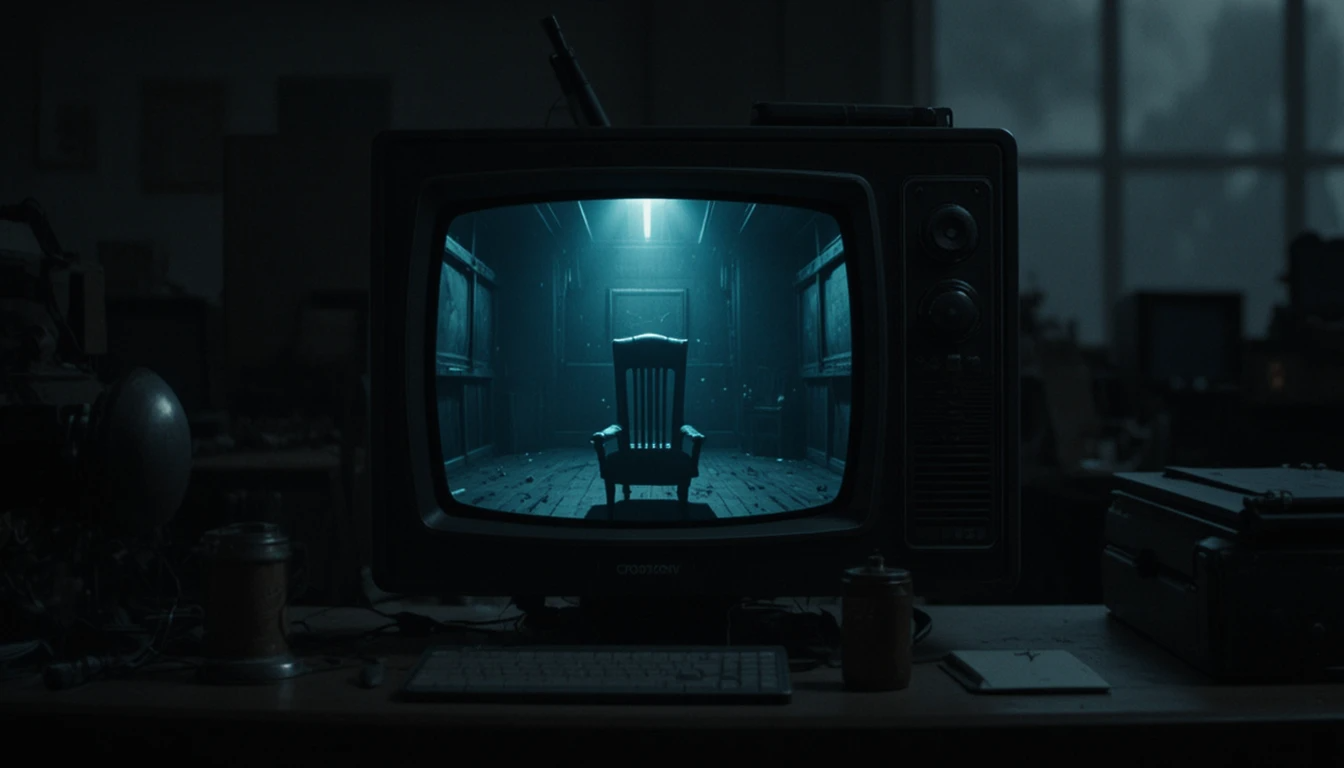
    “If the television is powered off, yet shows your reflection seated somewhere you are not, leave the room at once. Do not go near the glass or try to check its condition. A mandatory 10-minute wait outside is required before you can enter the area again.Do not look into the screen again.”

    This is perhaps the most personally violating rule. A powered-off screen is a dead eye. It should be black, inert. When it becomes a mirror showing a reflection that is not your own—showing you still sitting at the console when you are clearly standing, or showing you in your childhood home—the fundamental contract between observer and observed has been shattered.
    Netflix's Secret Archive
    Netflix’s Secret Archive

    The screen is no longer a passive display. It has become a window into an alternate “you,” or a predatory entity mimicking you. Approaching the glass is an invitation for it to reach through. “Testing it” by waving or making a face is a catastrophic mistake, as it confirms your awareness and engagement. The entity on the other side learns from your reactions. Leaving the room severs the connection. The instruction to not look again is a final, absolute boundary.

    The Unwritten Rule: Your Logbook is Your Lifeline

    Beyond the five official rules, there is an unwritten sixth, passed down through the quiet, weary looks of the day-shift guard who handed you the keys: “Log everything normal.”

    Consider the logbook not an obligation, but the very thread connecting you to a fading sense of normalcy. The conscious effort of documenting the trivial—”Archived Reel #A-734, 1985 documentary on fauna, all readings stable”—serves as a rite that buttresses the foundations of existence.Your task is to build a defense made from simple, ordinary thoughts. Your mind’s wall must block the influx of alien, incomprehensible forces that invade this space.

    When the darkness is absolute and the hush becomes a tangible pressure that twists your sight, your only safe harbor will be the well-worn, mantra-like words you have recorded.They form a protective incantation, carrying you to the safety of sunrise.

    Your Shift is About to Begin Netflix’s Secret Archive

    The lock yields to the key with a resonant metallic sound. The entrance glides open, exposing an immense, hollow interior filled with the scent of vintage film stock, accumulated dirt, and electric air. Illumination activates in sequence, one strip after another, revealing a complex network of storage units extending into the obscurity. A stainless steel workstation holds a record book, a writing instrument, and a solitary, draped ebony fabric.

    You have taken the job at Netflix’s Secret Archive. The pay is excellent. The work is unique. But remember, you are not just a cataloguer. You are a warden. You are the thin line between the stories we watch for fun and the stories that watch back. Follow the rules, trust your logbook, and you might just see the light of day again.
    The 7 Unbreakable Rules of an Overnight Security Detail

  • The 7 Unbreakable Rules of an Overnight Security Detail

    The 7 Unbreakable Rules of an Overnight Security Detail

    Congratulations — you’ve been assigned to the Overnight Security Detail for Terminal E of Halcyon International Airport. It sounds like a normal job, right? A quiet shift, empty halls, and nothing but routine rounds to make.The compensation surpasses that of typical jobs, and the isolation offers a refreshing respite from the turmoil of working daylight hours. However, within Halcyon International Airport, this quiet is deceptive, masking a more profound secret.

    The airport’s schedule is clear: no arrivals are permitted post-midnight. From the witching hour until five in the morning, its polished hallways are meant to be entirely devoid of staff. Despite this, a careful ear can detect the faint, unsettling sound of phantom pages reverberating through the empty terminals.

    This article is your essential briefing. We will uncover the unsettling truth behind this unique posting, combining crucial job-related insights, non-negotiable safety protocols, and the deeply woven lore of Terminal E’s night duty. Whether you are a real-life security professional considering a similar role or simply fascinated by dark airport mysteries, this is everything you need to know before your first shift begins.

    Section 1: The Job Overview — What Is the Overnight Security Detail?

    An Overnight Security Detail at any major facility is a critical role, but the one at Halcyon International Airport, specifically for Terminal E, is a breed of its own.Functioning within a specialized after-hours schedule, the position’s core purpose is to safeguard the terminal’s assets and ensure its protection when daily activities have ceased.

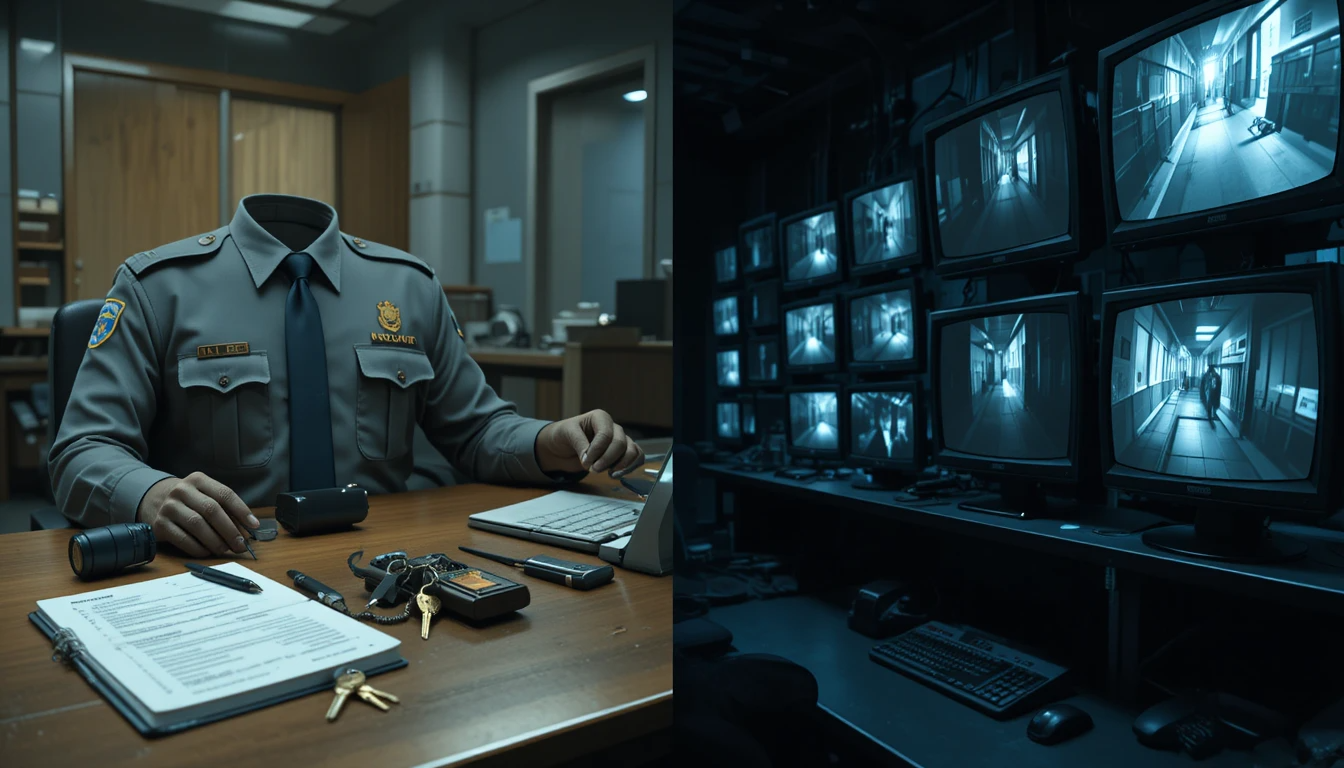
    As per official protocol, the job entails performing regular patrols across all passenger areas and gates, maintaining a constant and watchful review of footage within the security command center, documenting inspections on an hourly basis, and serving as the initial responder to any incidents reported by the emergency or breach alert systems.

    However, Terminal E operates under a shroud of official ambiguity. A late-1990s evaluation of the building’s renovation requirements led to the official public closure of the facility. It now lies in a state of complete inactivity, devoid of passenger traffic, flight operations, and custodial services. The airport management, however, insists on a constant, singular guard presence “for protocol and insurance reasons.”

    This raises the pivotal question that every new officer eventually asks: If the terminal is empty and closed, what, exactly, are we protecting it from? Veteran guards dismiss it as bureaucratic redundancy. But the few who have worked the shift more than once whisper about the “1997 incident” and the reason this wing was quietly sealed off from the main airport. Understanding this history isn’t just about curiosity; for the individual on the Overnight Security Detail, it’s about professional preparedness.

    Section 2: Why Terminal E Is Considered ‘Special’ and Unusual

    You can’t take this position without knowing the truth about Terminal E. Once the crown jewel of Halcyon for global travel, its fate was sealed by a catastrophic system meltdown during a storm in 1997.The incident resulted in a complete power loss and a disorderly emergency evacuation. Despite reopening half a year later, the terminal’s reputation was permanently damaged by an endless stream of technical problems and operational failures.

    Maintenance logs, which new guards are subtly encouraged not to read, detail recurring work orders for the same issues: flickering lights in Gate E-13, jet bridge doors showing as “open” on sensors when they are physically locked, and, most persistently, unauthorized, ghostly voices over the PA system when the main control board is powered down. Airport officials uniformly classify these as “persistent electrical anomalies and old wiring faults.”

    But the men and women who have walked the polished floors alone after midnight know this explanation is a comfortable lie. They don’t follow a simple rulebook; they adhere to a survival protocol. The high turnover rate for the Overnight Security Detail at Terminal E is officially attributed to the “isolating nature of the work.” It is a grave error to regard these protocols as simple folklore, a fact evidenced by the complete absence of any employee who has disregarded them returning for a second day of work. For the professional undertaking this overnight security detail, they are as vital as knowing the emergency exits.

    Section 3: The Five Unbreakable Rules of the Night Shift

    Your success and safety during your Overnight Security Detail hinge on more than just a uniform and a high-lumen flashlight. You are stepping into a role with a legacy, and that legacy is codified in five golden, non-negotiable rules. They are your primary operational procedures.

    Rule No. 1 — The Unauthorized PA Announcements

    Training suppressed her fear in the instant before it could surface. With her gaze locked ahead, she clamped her palm down on the ID card clipped to her chest, erasing her identity. Her body locked, a sudden eddy of frozen motion in the current of clueless commuters. The ensuing silence wasn’t just audible; it was a physical force, a suffocating mass that held until the final, jeering echo of the words had vanished.

    The voice was utterly alien—nothing of a human ground agent or a pilot. It was something else entirely. Guards who have instinctively looked up toward the speaker grilles have reported seeing a dark, humanoid reflection in the security glass, a entity that uses the intercom not to communicate, but to lure and observe.

    Rule No. 2 — The Autonomous Jet Bridge Movement

    The jet bridges in Terminal E are supposed to be dormant and locked. If you hear the distinct hydraulic hiss of one extending or retracting, or see its status light flip from red to green without cause, step away slowly. Do not approach it. Never attempt to manually re-lock the door. The system’s motion sensors are known to register phantom movement. The prevailing belief is that something uses those doors as an entrance when it believes it is entirely unobserved. Interrupting this process is considered a profound violation.

    Rule No. 3 — The Passenger Facing the Wall

    Security Directive 97-B: Personnel may observe an anomalous entity at Gate [REDACTED]. The figure will be attired in period-specific clothing (c. 1997) and will be oriented toward the perimeter wall. Direct interaction is prohibited. Upon detection, security personnel must immediately reroute their patrol path. The revised route must utilize the cover provided by the seating rows.

    Caution is paramount: do not traverse the entity’s shadow and avoid visual contact with its reflection in all surfaces (windows, monitors, polished metal). The phenomenon is classified as a “Echo,” believed to be a psychic remnant of a passenger displaced during the system-wide blackout of ’97, who subsequently failed to depart.

    Rule No. 4 — The Symphony of Ringing Phones

    It will start with one, then another, until every check-in counter phone at the terminal is ringing in a dissonant chorus. Your directive is clear: never answer. Let them ring until they stop. If one phone continues to ring persistently after the others have fallen silent, you are to locate its cord and unplug it from the wall—without looking at the caller ID screen.

    One guard who disobeyed this rule reported a voice on the other end whispering his full name and home address before the line went dead. He resigned the next morning.

    Rule No. 5 — The Phantom Arrival Board

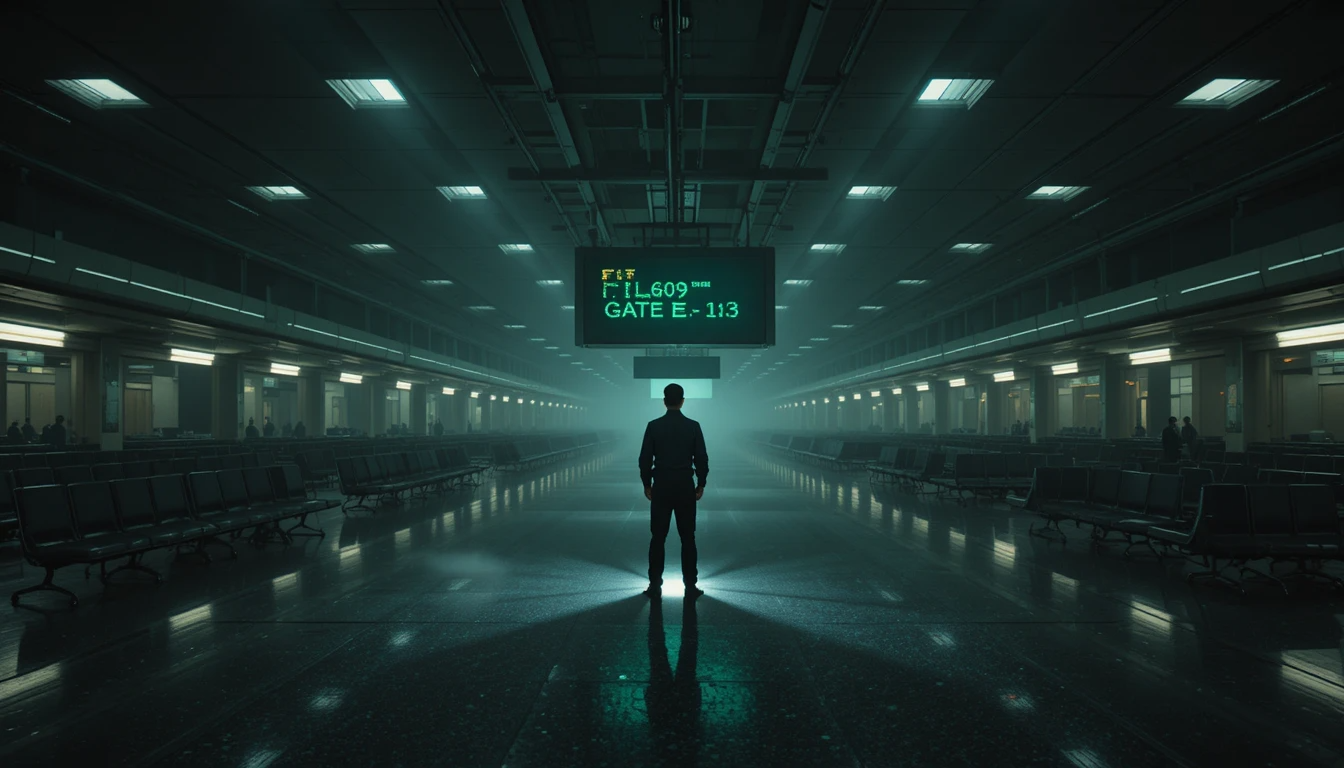
    The main arrival and departure board is supposed to be blank. If it suddenly lights up, displaying destinations that are obsolete, impossible, or correspond to cities that no longer exist, do not read the listings. Avert your gaze immediately. The lore suggests that if you read more than two of the listed city names, “it” becomes aware of you and can read your memories and fears in return. Your focus should be on your feet, walking away until you are out of its line of sight.

    Adherence to these five rules is what separates those who complete their overnight security detail from those who become part of Terminal E’s growing legend.

    Section 4: The Real-World Side — Why Such Overnight Security Jobs Exist

    While the story of Halcyon’s Terminal E leans into the supernatural, the profession of the Overnight Security Detail is a very real and essential career path. Airports, data centers, warehouses, and corporate complexes worldwide require a physical security presence even when operations have ceased. These positions are the backbone of asset protection and risk management.

    The tangible duties are extensive and critical:

    This concept is recognized even in stories, where mental strength is consistently highlighted as the foremost requirement. Using the “rules of Halcyon” as a metaphor, these stories illustrate the authentic psychological warfare waged within—how a person’s mind grapples with intense quiet and a lack of human contact.

    Ambient sounds and shadows can create unease, underscoring a universal professional lesson: always follow protocols, trust your instincts, and avoid complacency, as the night environment persistently tests one’s resolve.

    Section 5: Unraveling the Enduring Mystery of Halcyon’s Terminal E

    So, what is the true source of the phenomena in Terminal E? Local historians and urban explorers claim that the terminal was built on reclaimed land adjacent to the city’s original, World War II-era airfield. Some suggest that its modern electrical wiring is improperly grounded and intersects with the original, decaying power grid, creating a “recording” effect of past events. Others, however, whisper that the land itself is the issue, and that something far older than the airport lingers beneath the tarmac, using the terminal as a conduit.

    The airport management’s policy of a “mandatory personnel rotation” for the overnight security detail every few months is officially for “mental freshness.”Those familiar with the situation understand the cause: few newcomers remain for long. Most either vanish without formal notice or end their first few shifts ashen-faced and traumatized, falling into a stubborn silence about their ordeal.

    Overnight Security Detail
    Overnight Security Detail

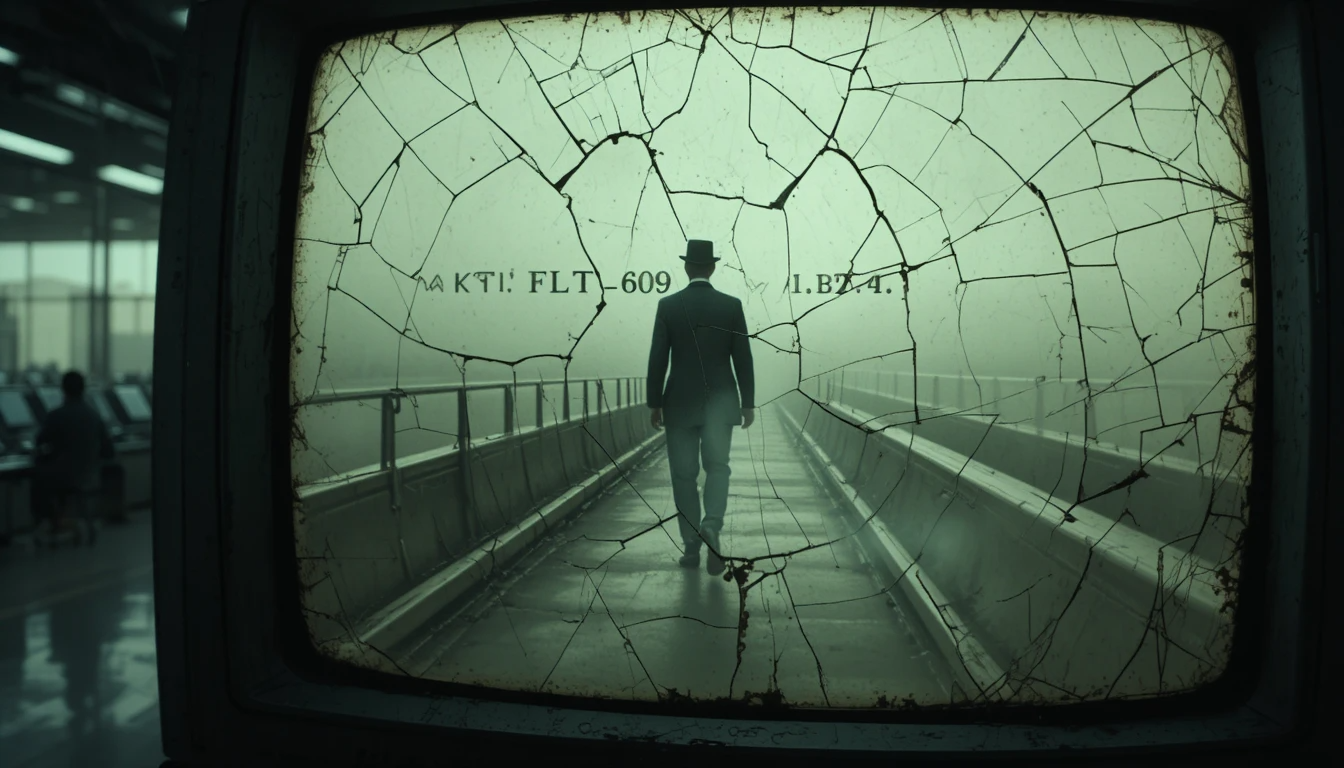
    The most compelling piece of the puzzle involves the “ghost flights.”Aviation historians note a peculiar anomaly at Terminal E: the recurring announcement of Flight 609. Don’t mistake this for a real flight; it is merely a phantom reverberation of a tragedy. Historical documents.The observed occurrence is not an actual departure but a paranormal recurrence of a documented event.

    Data indicates that Flight 609, on a transatlantic route from Prague to Halcyon, ceased all contact and disappeared from tracking systems in 1989. This spectral manifestation, primarily observed at 03:17 hours, signifies the time of the aircraft’s final communication. The terminal has since become an unofficial memorial for the lost flight.

    Whether grounded in truth or the powerful engine of collective myth, the legend of Terminal E persists. To this day, job listings for the overnight security detail at Halcyon International Airport continue to appear on employment portals, offering competitive pay, seemingly simple duties, and one prominently displayed condition in the contract: “Follow all operational rules exactly as written.”

    Conclusion: Your Shift Awaits

    Guarding Terminal E of Halcyon International during the midnight hours transcends mere work. In the profound silence, it becomes a relentless trial, measuring your concentration, your capacity to master unease, and your trust in what you see and hear in the shadows. You are not merely guarding an empty building from vandalism or theft—you are, according to the lore, acting as a guardian on a boundary line, a line between the world we know and things that should not exist.

    The midnight shift at Terminal E isn’t like other security details—it’s governed by severe warnings. In that place, submerged in an ocean of absolute stillness, let your drills be your guide and the rules your compass. But above all, heed the whispers within the quiet. They carry a warning. For at Halcyon, the silence isn’t just empty space—it’s a shield, and it’s the only thing standing between you and the unknown.

    Good luck, Officer. Your Overnight Security Detail begins at 12:00 AM.

    $60/Hr Night Technician’s Chilling Survival Protocol

  • $60/Hr Night Technician’s Chilling Survival Protocol

    $60/Hr Night Technician’s Chilling Survival Protocol

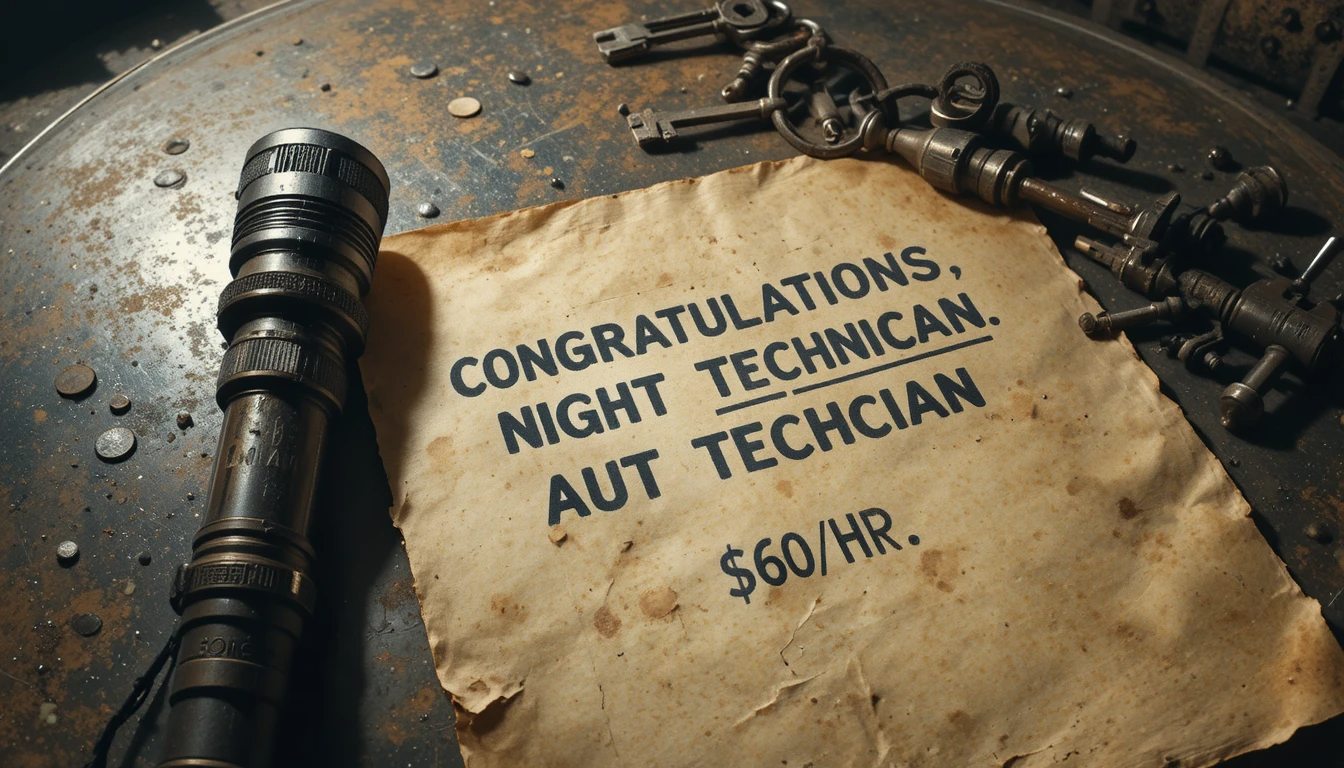
    Congratulations.”You have been chosen for the position of Night Technician’s, Sector B Control Room, at the Black Ridge Power Plant.” After navigating a deliberately opaque application process and excelling in an interview characterized by its profound silence, the confirmation finally arrived. The envelope was substantial, the parchment within, weighty. Its message was both succinct and transformative:

    The pay is astronomical—$60 an hour. The perk is bizarre—you’re allowed to bring one friend for backup. But the instructions… the instructions are where the reality of this job diverges sharply from any standard technical manual. This isn’t just a job; it’s a trial by fire in the dark. Your task may be simple on paper—”keep the power stable and follow every rule exactly”—but every seasoned Night Technician’s knows the rules are what you’re truly there to manage.

    “This guide serves as an unofficial companion, offering a thorough exploration of the underlying nuances within your new position. We are moving beyond a superficial reading of the guidelines to a critical interpretation of their intent.”

    The Weight of the Offer: More Than Just a Paycheck
    A $60-an-hour position for a single Night Technician’s shift doesn’t come without strings. It’s a sum that suggests not just compensation for technical skill, but hazard pay for the unknown. The permission to bring a friend is the first red flag masquerading as a courtesy. It implies the management understands the psychological toll, or perhaps, that two sets of eyes are better than one when observing the unnatural.

     Night Technician's
    Night Technician’s

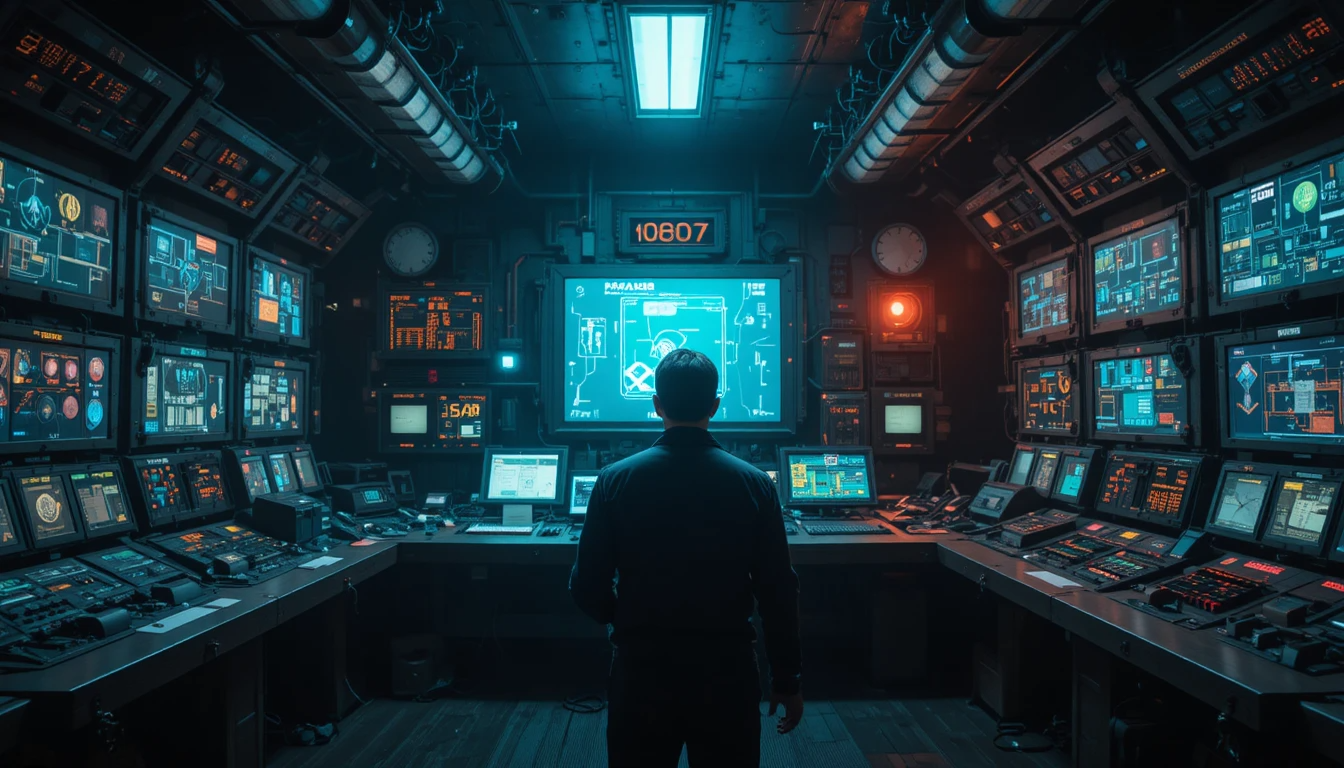
    The Control Room for Sector B serves as the central, if irregular, pulse of Black Ridge. Its control panels combine sleek, contemporary displays with ancient, oiled-bronze switches that appear to belong to an era before electrical power. A perpetual drone from the primary power grid provides a background hum, which eventually becomes a source of solace.When that hum changes, your real work begins.

    Deconstructing the Rulebook: A Survival Protocol
    These rules are survival algorithms, not optional advice. We will unpack their mechanics by looking at their technical structure, psychological impact, and practical execution.

    Rule 1: Generator Auto-Start Protocol

    In the event of an unscheduled automatic initiation of the backup power unit, personnel must observe a mandatory ten-second stabilization period. No control interface is to be engaged until this full duration has elapsed.”

    On its face, this appears to be a fundamental safety procedure designed to avert voltage spikes. Any skilled Night Technician’s working the night shift is fully aware of the risks associated with a progressive system collapse. But why ten seconds? Why not five or fifteen?

    The Technical Reason: The ten-second count is a buffer. It allows the system to self-correct, to find its own equilibrium. Jumping in immediately could send a destabilizing feedback loop through the entire plant.

    The Unspoken Reason: The generators aren’t just machines here. The count is a test of patience and nerve. It’s in those ten seconds of deafening, unauthorized operation that you’ll hear the other sounds—the faint scraping from the vents, the almost-silent whisper that seems to ride the current. It’s a moment of observation. What you do after the count is technical; what you learn during it is crucial for your survival.

    Rule No. 2:

    “If the intercom crackles with your name, reply only once and ask ‘What’s your clearance?’ If there’s no answer, cut the power to the speaker.”

    The intercom is your lifeline, but at Black Ridge, it can also be a snare. The instruction is meticulously clear: one reply.

    The Technical Reason: A crackle without a clear signal could be feedback, a crossed wire, or system malfunction. Engaging in a prolonged conversation is pointless and drains focus from the primary grid.

    The Unspoken Reason: The voice on the intercom may not be human. It may be a mimic, a parasitic signal using familiarity to lure you into a dialogue. By asking for clearance, you are demanding a password, a proof of identity. Silence is an immediate fail. The act of pulling the plug transcends mere silence; it is the deliberate termination of a link. An expert Night Technician’s knows that certain channels are best permanently closed.

    Rule No. 3:

    “When the lights flicker, check every monitor in order 1 through 9. If one shows an unknown reflection, shut down the main grid and hide. They’re coming for you.”

    This is the core of the threat. The flicker is not a power dip; it’s a herald.

    The Technical Reason: The sequential check of monitors 1 through 9 is a diagnostic ritual. It forces a methodical, calm assessment under duress, preventing panic-driven oversight.

    The Unspoken Reason: The “unknown reflection” is the key. It’s not a person, not an animal. It’s something that shouldn’t cast a reflection, yet does. It’s an entity that exists partially in our reality and is using the monitor as a window. Shutting down the main grid is a drastic measure—it plunges the entire sector into darkness and silence. But the rule is explicit: it’s better to face the administrative wrath for a grid shutdown than to face them. “They’re coming for you” is the most direct confirmation that your role as the Night Technician’s is one of a warden, and you are not alone in your prison.

    Rule No. 4:

    “If the elevator stops below Level 4, use the ladder immediately. What’s down there comes up when the doors open.”

    Levels B1 through B3 are on the schematic. There is no “below Level 4.” This rule acknowledges a geography that doesn’t officially exist.

    The Technical Reason: The elevator is a death trap if it breaches this unofficial threshold. The ladder shaft provides a controlled, physical escape route.

    The Unspoken Reason: This is a zero-ambiguity rule. There is no “if,” “but,” or “maybe.” The entity “down there” is drawn to the sound and light of the opening doors. The ascent is a shadowy, grueling climb through a constricted passage, demanding every ounce of physical resolve. Yet, this very hardship is its own defense, a route your adversaries would deem impassable. To endure, you must willingly embrace the arduous and the obscure, forsaking the ease of the apparent way.

     Night Technician's
    Night Technician’s

    The Role of Your Friend: Backup or Buffer?
    The “bring a friend” promotion is a strategy with inherent risks and benefits. Your friend is likely not a trained Night Technician’s. They are your tether to the normal world, a source of rational skepticism. But they are also your responsibility.

    Their Value: A second pair of eyes to watch the monitors. A second person to hear the intercom.They serve as a vital sounding board, helping you determine whether your fears are ungrounded or if your concerns are legitimate.

    The Risk: They are a variable.

    Will they panic during the ten-second generator count?As the lead Night Technician’s, your primary duty is to impart the protocols with such clarity and conviction that your team follows them with the unwavering discipline of a first responder in a crisis.

    The sole objective is to make it through the night alive.

    The true nature of the shift lies not in moments of bravery, but in the sustained capacity to endure. You are not paid to investigate, to explore, or to conquer. You are paid to maintain and to survive. Every action, from the ten-second count to the frantic climb up the ladder, is in service of seeing the sunrise.

    The promotion to Manager Level is the carrot, a promise of a different kind of power, perhaps daylight shifts, or authority over these nocturnal mysteries. But first, you must be the Night Technician’s who lasts. The real energy you must regulate at Black Ridge Power Plant doesn’t surge through the cables—it’s the silent, creeping current of dread in your own chest. Let that overload, and the lights go out for good.

    The hum of the grid is your clock. The rules are your map. Good luck, Night Technician’s. Your shift starts now.

    Inside Rosewood Nursing Home: Shocking Night Care Secrets 6

  • Inside Rosewood Nursing Home: Shocking Night Care Secrets 6

    Inside Rosewood Nursing Home: Shocking Night Care Secrets 6

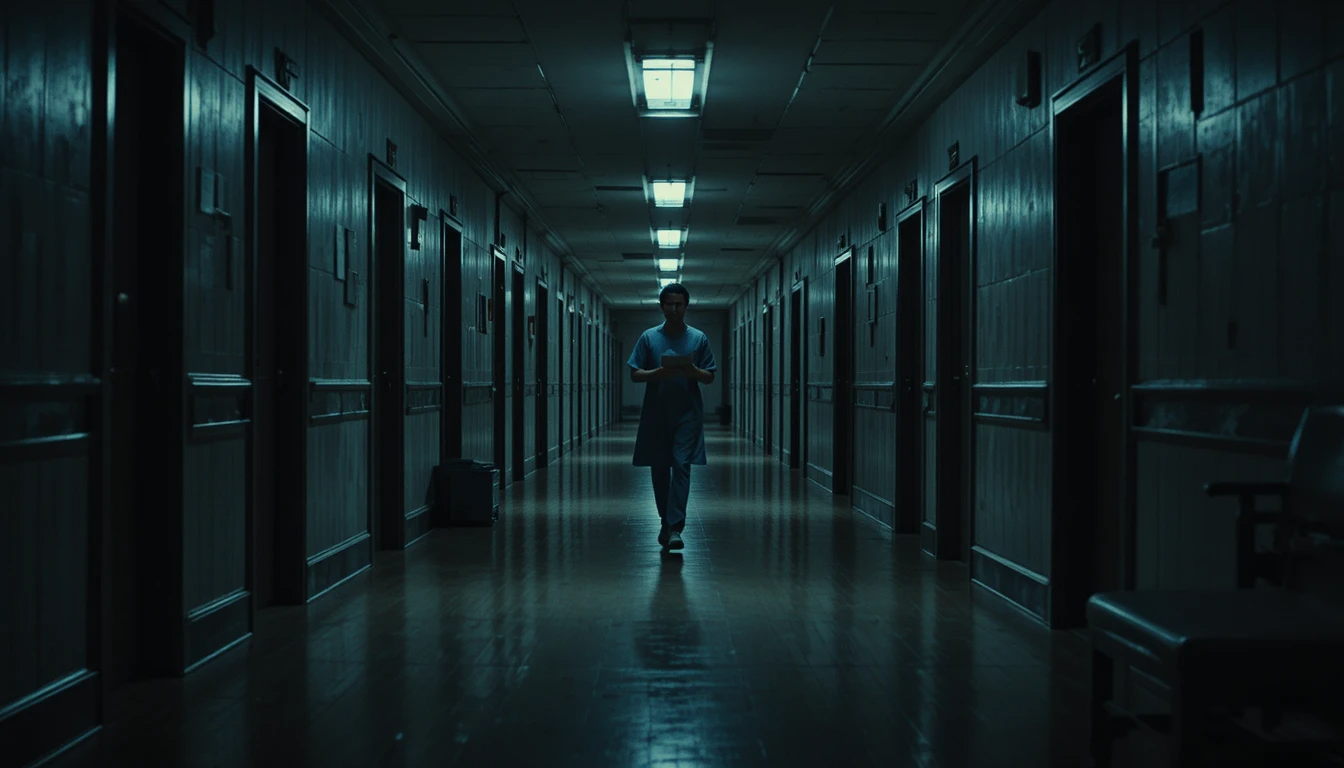
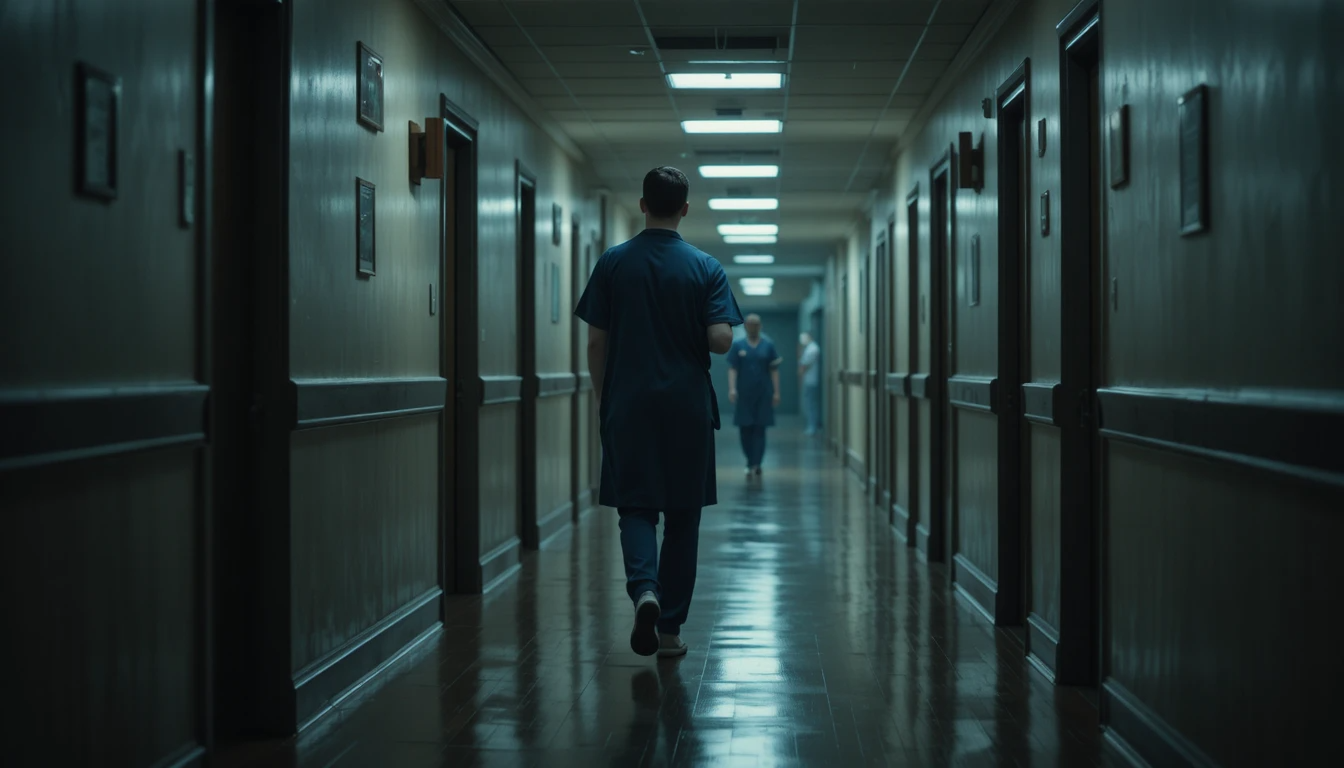
    I never thought I’d be nervous about a hallway light.But there I was, clipboard in hand, standing in Rosewood Nursing Home, Jericho, West Virginia. Quiet town. Quiet building. Too quiet, actually…

    The ad made it sound simple. “Seeking responsible night caregiver for elderly residents. Must be calm under pressure.” Easy, right? Pay was fair. Halls clean. Manager smiled. All normal.

    Except it wasn’t.


    10 PM: Arrival

    The floors creaked. The elevator hummed. And yes—I thought I heard a whisper.

    Manager handed me a slip. Ten rules.

    “Follow them. Especially Rule Number Six. Don’t ask why.”

    I nodded. Heart pounding. Pocketed the paper.

    Rosewood Nursing Home
    Rosewood Nursing Home


    What Night Caregiving Actually Is

    People think Rosewood Nursing Home = meals + meds.

    Wrong.

    Nights are different.

    You’re watching. Listening. Protecting. Comforting. Every sound matters. Every shadow matters.

    Even a soft sigh can make you pause.


    The Rules

    1. Lights always on. Darkness confuses residents… and other things.

    2. Investigate noises carefully. Not every creak is dangerous, but some are.

    3. No strangers after 11 PM. Staff or not. Verify.

    4. Soft common area noise. TV, music, gentle hum. Keeps minds calm.

    5. Elevator caution. Move? Close it. Don’t investigate.

    6. South Wing after 2 AM = off-limits. Just don’t go.

    7. Hourly headcounts. Missing someone? East Wing first.

    8. Approach residents slowly. Sudden movement = panic.

    9. ID visible at all times. Security + unknown “other reasons.”

    10. Leave immediately at shift end. No lingering.

    By 2 AM, these rules made sense.


    12:30 AM: Mrs. Thompson

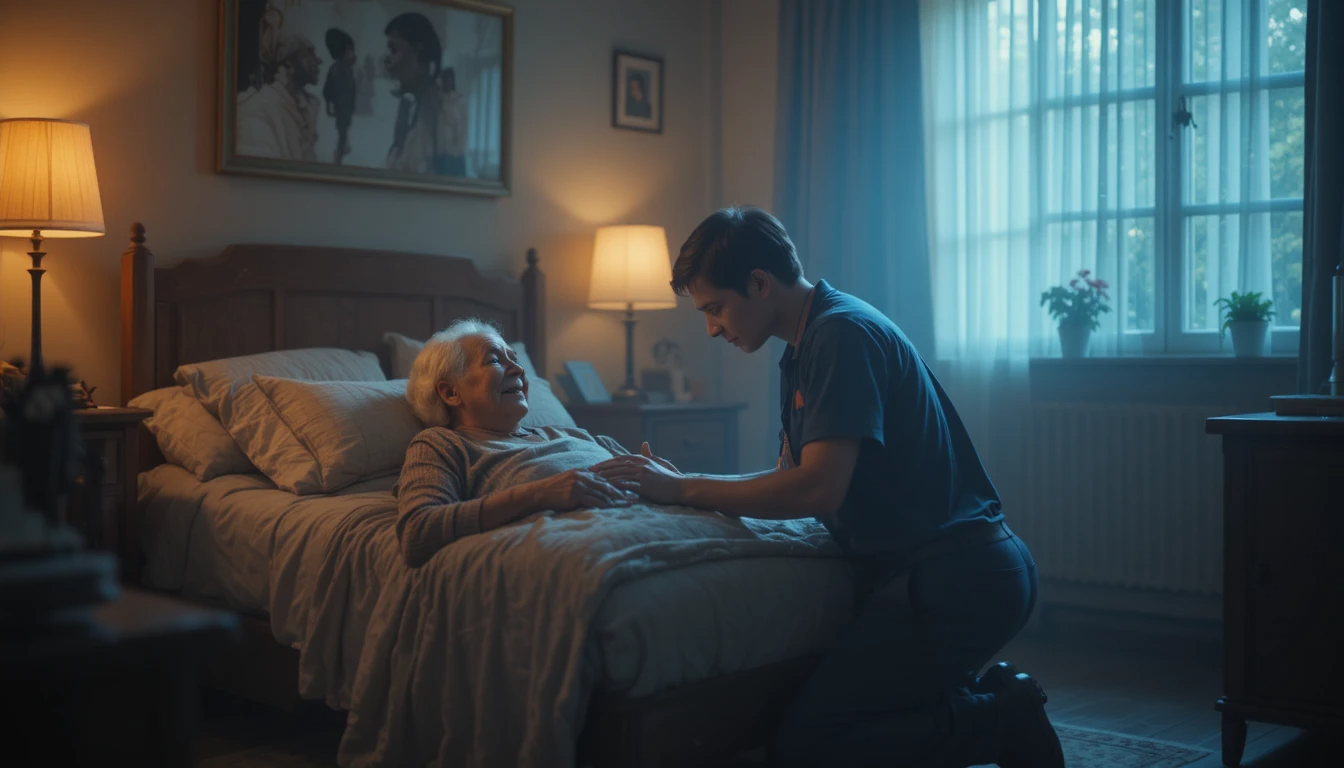
    “Where… am I?” Her voice trembled.

    “You’re safe. I’m right here.”

    Her hands shook. I stayed calm. She relaxed. My chest still thumped.

    Then… South Wing. Shadows stretched. I followed Rule Six. Walked past. Heart racing.


    Night Challenges

    • Emotional strain — loneliness amplified

    • Sleep disruption — body screaming, residents needing

    • Constant vigilance — one mistake, big consequences

    • Unpredictable events — sleepwalking, agitation, murmurs

    But… nights have a strange satisfaction. Feeling needed. Feeling responsible.


    Skills That Help You Survive

    • Patience — endless

    • Observation — subtle changes matter

    • Quick thinking — falls, emergencies, agitation

    • Communication — morning staff rely on your notes

    • Physical endurance — residents need assistance


    A Night in My Diary

    10 PM – Checked logs. Supplies ready. Quiet floors.

    11 PM – First rounds. Residents asleep. Shadows long.

    12:30 AM – Vital checks. Gentle, quiet, precise.

    2 AM – South Wing. Didn’t go. Shadows stretched. Heart pounding.

    3:30 AM – Residents awake. Water, soft words, hand-holding. Repeat.

    5:30 AM – Dawn. Shift ends. Out I go. Heart lighter. Exhausted.


    Tips for New Night Caregivers

    • Hydrate. Snack lightly. Nights drain you.

    • Speak softly. Move calmly. Residents feel it.

    • Document everything. Seriously.

    • Stick to rules. Weird ones included.

    • Use synonyms in logs: care assistant, night helper.

    • Short sentences help focus.

    • Rosewood Nursing Home
      Rosewood Nursing Home

    Why This Job Matters

    Being a caregiver Rosewood Nursing Home isn’t about tasks.

    It’s trust. Empathy. Presence.

    Hallways quiet. Shadows long.

    But you are there. You bring safety. Comfort. Dignity.

    Rosewood is strange. Rules weird. Nights long. Shadows… whisper.

    Work is meaningful. Hand held. Resident reassured. Heart calmed. Worth it.


    Final Thoughts

    Rosewood taught me patience. Courage. Discipline.

    Following Rule Six? Survival.

    Even in silence, in shadows, being a night caregiver matters. You matter. Residents feel it. Every sleepless hour worth it.

  • Hello world!

    Welcome to WordPress. This is your first post. Edit or delete it, then start writing!