Tag: Supernatural Employment

  • Hired As Santa Claus? 7 Deadly Rules You Must Know Now.

    Hired As Santa Claus? 7 Deadly Rules You Must Know Now.

    Congratulations. You have been hired as Santa Claus.Let’s not pretend. This wasn’t a meritocracy. There were no interviews, no vetting of credentials, no debates over your vision. You are here for a single, practical, and chilling reason: the suit happened to be your size.

    The last one stopped screaming, and the dimensions of your shoulders, the length of your inseam, matched the crimson wool and white fur. The mantle is yours. The sleigh is primed, the reindeer are pawing at the frost-laden roof with a restless energy that speaks of ancient pathways. Your global delivery window is imminent.

    But before you take up the reins, you must understand: this is not a role of mere gift-giving. It is a custodianship of a delicate, powerful, and perilous magic. There are rules. They are not suggestions. Ignore them, and you will not simply be fired. You will be unmade. Pay particular attention to the last one.

    The Nature of the Mantle

    First, disabuse yourself of the cultural cartoon. You are not a jolly, retired grandfather baking cookies in a polar workshop. You are a seasonal force, a necessary symbol woven into the fabric of belief, fear, and hope that peaks on a single night. The suit is not a costume; it is a symbiotic vessel. It contains the collective expectation of millions of children and the residual echoes of every man who wore it before you. The “job,” therefore, is one of preservation and precision. The magic operates on strict, paradoxical laws—whimsical on the surface, iron-clad beneath. Your predecessor learned this, to his detriment. His screaming has finally subsided. Let his experience be your primer.Santa Claus

    Santa Claus
    Santa Claus

    The Rules for Survival

    Rule No. 1: Never, under any circumstance, deliver a present to street address No. 6, 6 6.

    Its location feels transient and eerie. It might manifest as a solitary ‘6’ on a peaceful, deserted street, or transform into the sinister sequence ‘666’ materializing on a bleak, unexpected boulevard heavy with shadow.
    Yet the dwelling is always the same—an inviting facade of warm light and holiday stockings, a stark contrast to its shifting, spectral identity. Ignore it. The entity within is not a child. It may wear a child’s shape, it may whisper a child’s wishes, but it is a void that feeds on the magic of unconditional giving.

    To place a gift on that hearth is to anchor yourself to its hunger. Chimney to throat, fireplace to maw. Your trap is perpetual Christmas Eve—silent, static. Your sack: always full, always draining. You are the ghost in this machine, fueling an endless consumption that brings no joy. The sleigh cannot retrieve you. You will simply become part of the address’s decor.Santa Claus

    Rule No. 2: Never remove the suit. Not to sleep. Not to eat.

    The suit is your skin now. It will not soil, it will not tear. The compulsion to scratch, to feel a breeze on your stifled neck, will become overwhelming. You must not yield. The instant you finally unbuckle the clasp and peel the suffocating wool from your wrist, a dreadful truth will dawn: the person it once held is gone.
    The “you” that pulled on the suit was absorbed, integrated.

    Your flesh, your memories, your love of coffee or jazz or gardening—all have been translated into the operating system of Santa Claus. If you see emptiness under the fur, do not panic. It is not that you are gone; you have simply become elsewhere. Worse, the suit, offended by your attempt, will crawl back onto you. Its embrace will be colder, tighter, the fur feeling more like bristles, the buckles cinching with a resentful finality.

    Rule No. 3: Do not let the children see your face. Not truly.

    Santa Claus
    Santa Claus

    You will enter dim rooms, lit only by nightlights or the glow of a Christmas tree. A child may stir. If they squint through the gloom and murmur, “You don’t look like Santa,” remain calm. Ignore it.

    They’re remembering someone else. They are recalling the previous occupant of the suit, or a storybook illustration. Reassure them with a soft “Ho, ho, ho” and continue your work. This is normal.

    However, if a child’s eyes snap open, clear and awake, and they look at you—really look at you—and then smile, saying with utter certainty, “You look better this year,” RUN. Do not finish placing the gift.

    Do not reach for the cookie. They are not seeing you, nor any past Santa. They are seeing the suit’s true, shifting face, and they prefer it. That child is a sensitive, a beacon for things that watch from the edges of the myth. Your presence has been noted by more than just the child. Leave immediately.

    Rule No. 4: If any reindeer’s antlers are burning, do not approach. The fire is not heat; it’s attention.

    The reindeer are not animals. They are concepts given form: Dasher is Velocity, Prancer is Levity, Blitzen is Suddenness. Their antlers trace the ley lines of the night. Sometimes, they intersect with a point of fervent, desperate belief—a dying wish, a traumatic plea—and it manifests as a cold, spectral flame wreathing their antlers. This flame is attention. A focused, raw need from the waking world.Santa Claus

    If the burning reindeer turns its head toward you, lower your eyes and back away slowly. You are not the object of its gaze. It is looking through you, at the source of the signal. To meet that gaze is to forge a direct connection, to pull that concentrated despair or longing into the sleigh with you. It will taint every gift you deliver from that moment on. Let the reindeer process the signal. The flame will extinguish when the path is cleared.Santa Claus

    Rule No. 5: You must finish before sunrise.

    As the most critical and non-negotiable tenet, this rule is the essential foundation. Santa’s magic is confined to a liminal state—existing in the night, at the precise boundary of dates, and between wakefulness and dreaming. Consequently, sunrise acts not as a simple morning light, but as a total reset that erases the conditions necessary for that magic to exist.Santa Claus

    If the sun’s first ray catches you mid-delivery, several things will happen at once. The sleigh will lose its buoyancy, landing itself on the nearest surface with a final, hollow thud. The reindeer will kneel. But not for you. They will kneel toward the east, in a posture of submission or perhaps mourning. The connection is severed.

    Santa Claus
    Santa Claus

    And you? You will be stranded. The suit will become inert cloth, heavy and damp with melting frost. The boundless sack will be just a bag of toys. You will be a man in an absurd, fraying costume, surrounded by silent, kneeling beasts, as the ordinary world wakes up to a Christmas morning, some children inexplicably disappointed. The role will be vacant. Christmas needs a Santa Claus. The myth cannot lapse. Another will be found, hastily, before next year. Someone whose suit will fit.

    And you… you will be left with the memory of the magic and the crushing weight of the normal, a king dethroned at dawn, forever hearing the echoes of sleigh bells in every passing wind.

    The Final Benediction

    So, take up the sack. Feel its bottomless weight. Grease the runners. Check the reins. The world below, shimmering with lights and dreams, awaits its annual validation. You are not a person tonight; you are a function, a delivery mechanism for hope, bound by sacred, terrifying protocols. You were chosen because the suit fit. Now you must ensure the suit survives the night. The previous wearer’s screams have faded. Do not let yours be the next to echo in the workshop void.Santa Claus

    Avoid Catastrophe: 5 Haunting Protocols for Night Caregiver | Rule No. 6
     

  • Post-Mortem Supervisor: 5 Essential Rules for a Perfect, Uneventful Shift

    Post-Mortem Supervisor: 5 Essential Rules for a Perfect, Uneventful Shift

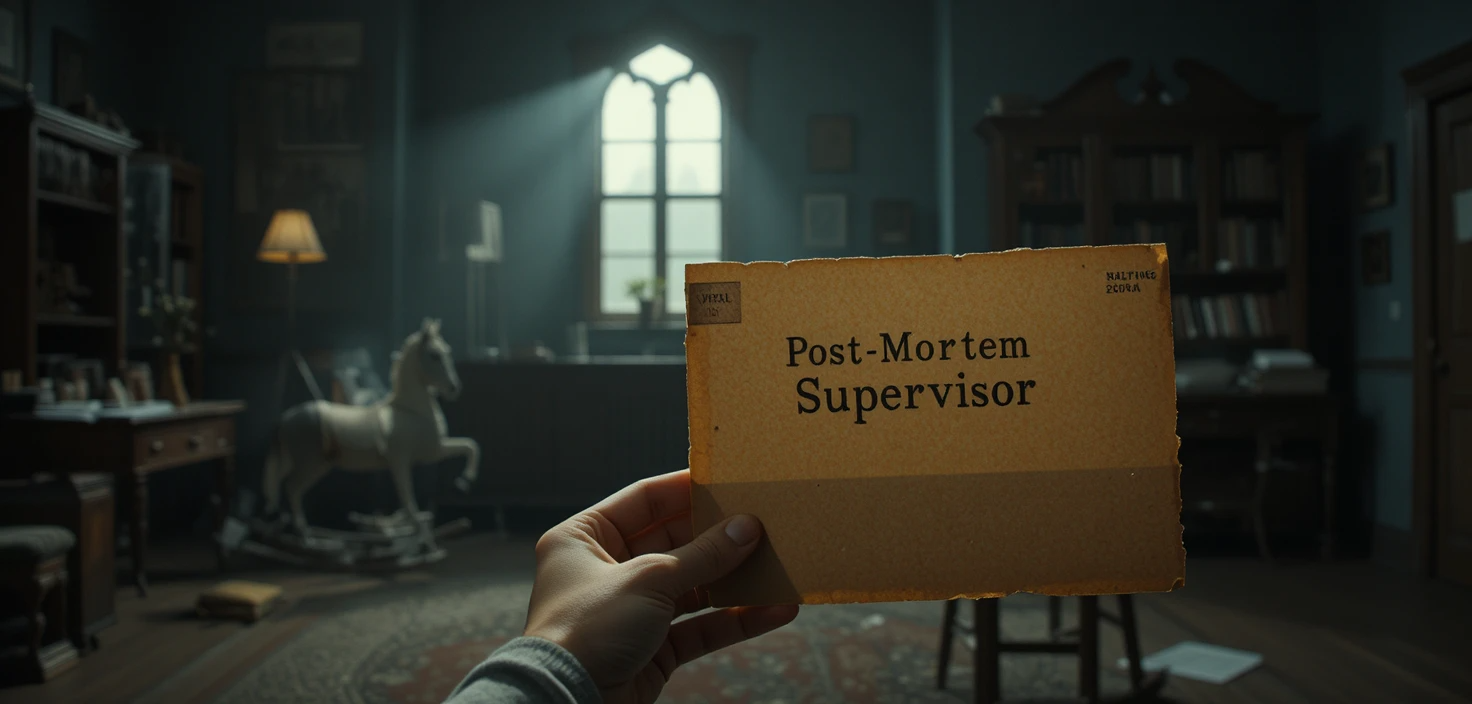
    Congratulation;The envelope you hold is more than an employment contract; it is a passkey. Specifically, a passkey to the Saint Ivy’s Children’s Memorial Wing, and to the playroom you will open each night from midnight until dawn. Your designation: Post-Mortem Supervisor. The pay—$24 per hour plus additional compensation for “unexpected activity”—is substantial, but it is not merely a salary.

    It is an agreement.On the surface, the duties are simple—tidying playthings, keeping the room warm, heeding the five door-mounted directives. Yet this routine transcends simple procedure. It is a ritual of vigilance, crucial for your preservation and for upholding a precarious harmony in a space where recollection, self, and simulation are forever intertwined.

    This manual is unofficial; Saint Ivy’s does not issue one. It is a collection of understandings, passed quietly from one supervisor to the next, to help you manage the deep obligation you have undertaken. The central concept of your new role, the bedrock of your nightly work, is your precise title: Post-Mortem Supervisor. You are not a custodian or a conventional security guard.

    You are a Post-Mortem Supervisor in the fullest meaning: one who monitors, who upholds structure, and who offers a quiet, constant anchor in a domain that functions by its own peculiar logic. You will repeat this term, “Post-Mortem Supervisor,” to yourself frequently. It will center you when the warmth fluctuates without warning or when the darkness seems to take on unusual shapes.

    Your central responsibilities seem simple, yet each is laden with meaning. To put a toy away is to act as a curator of childhood. Each stuffed companion, each wooden block, each miniature saucer is not mere clutter, but a sacred vessel preserving a fleeting memory. To arrange them properly is a gesture of honor. It communicates, “You are not forgotten. Your belongings are protected.” Maintaining the room’s warmth is your most physical task.

    Post-Mortem Supervisor
    Post-Mortem Supervisor

    The heat is not only for coziness; it is the vitality of the space, the shield against the numbness of grief and the icy draft that invades when protocols are ignored. A sudden chill is your earliest and most consistent sign that the atmosphere is becoming agitated.

    Now, we address the rules. They are your essential instructions. Do not doubt their peculiar nature; comprehend their intent.

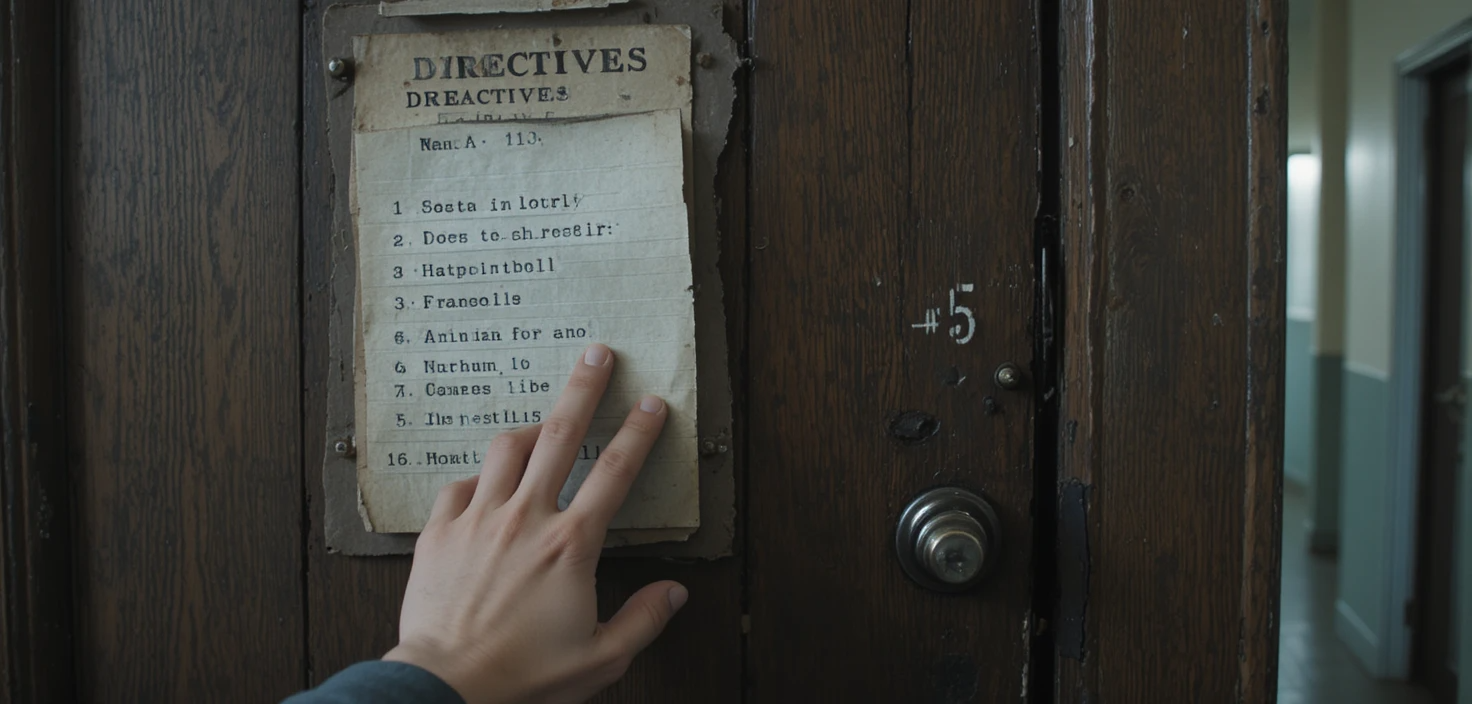
    Directive 1: Invariably unseal the playroom from within. Should the door already be unlatched upon your arrival, shut it, tally to five, and rap twice. An occupant within requires the formality.

    This rule defines the structure and sacredness of the area. By unsealing it from within, you figuratively cross into their realm; you are a visitor in an autonomous zone. Discovering the door open is an uncommon but meaningful occurrence. It is not a welcome, but a diversion or an examination. Closing it re-establishes the limit. The five-second count is a pause, an interval for any residual presence to become calm. The two raps are a formal declaration of your entry, a politeness shown to invisible proprietors. It recognizes their existence before you enter.

    Directive 2: Should a plaything relocate independently, retrieve it and position it correctly on the shelf. Do not observe it for an extended period. Its observation of you becomes more intense.

    This is where your additional compensation provision becomes applicable. “Unexpected activity” frequently originates here. The motion is an appeal for notice, a flicker of intention. Your reaction must be routine and deliberate: collect and store. Do not wonder. Do not scrutinize. The caution about observation is paramount. Your attention grants it strength, solidifies its reality in a manner that can become persistent and directed—toward you. You are a Post-Mortem Supervisor, not an onlooker. By responding without pause, you confirm that such events fall within the standard scope of your duty, something to be placidly addressed.

    Directive 3: If the sound of children’s amusement arises from behind you, grin and acknowledge it even if the area is vacant. They dislike being disregarded, and the climate cools when they are displeased.

    This rule concerns recognizing the imperceptible. The laughter is an offering, an indicator of a tranquil period. To dismiss it is profound discourtesy in this setting. The smile and nod are a global signal that states, “I perceive you. Your happiness is accepted.” The link between their mood and the room’s temperature is immediate. A quick icing on the panes, your breath condensing in air—these are critical warnings. It signifies a failure in some basic respect, and the surroundings are turning adversarial. As a proficient Post-Mortem Supervisor, sustaining that ambient heat through considerate engagement is the majority of the work.

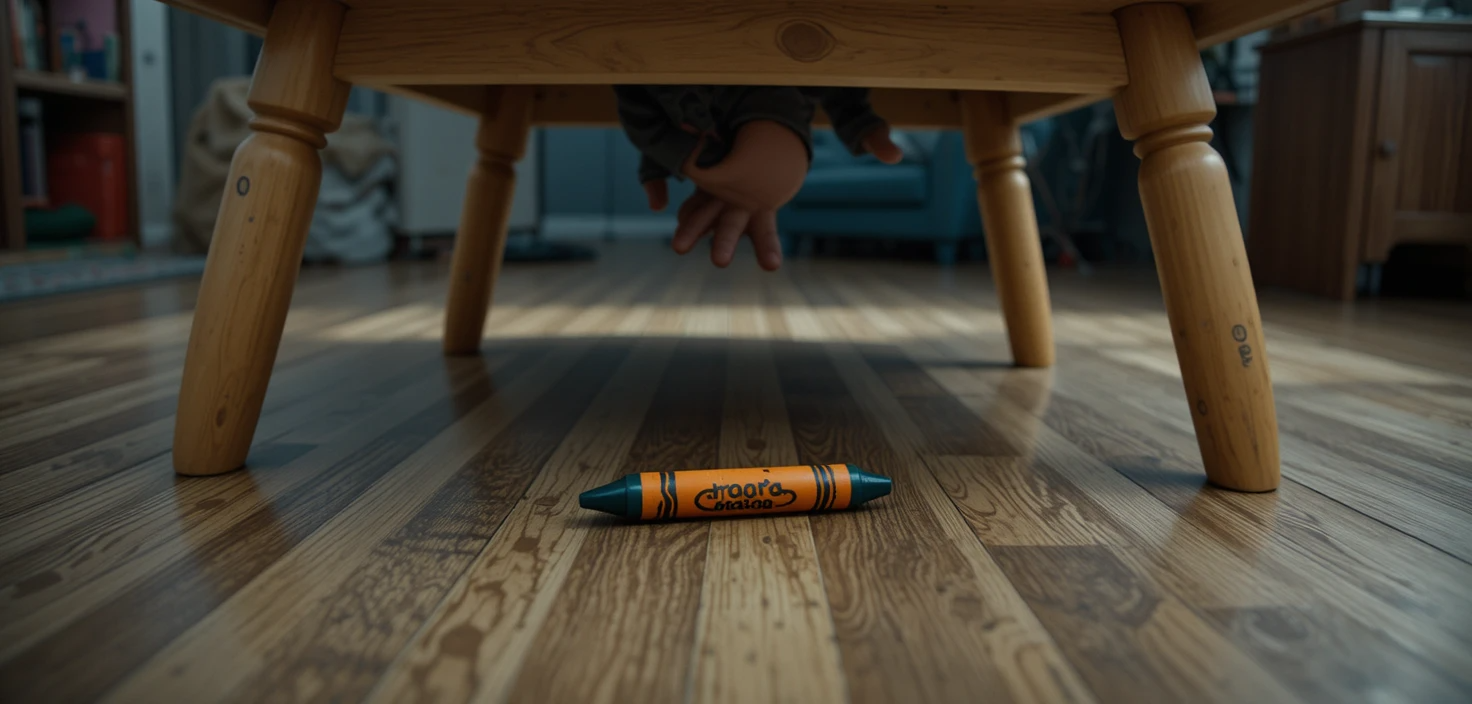
    Directive 4: Should a shadow of juvenile proportions manifest beneath the activity table, present it a drawing tool and withdraw. If it accepts the tool, all is well. If it declines, activate the projection lamp. This redirects its focus.

    Shadows are not the same as laughter. They are more concentrated, more tangible. The shadow beneath the table is an inhabitant that has opted to appear in a semi-solid state. The offering of a drawing tool is a bid to create, to direct energy into something benign. It is an accord. Acceptance is Favorable. Refusal signals stubbornness or playful trouble. The projection lamp provides not just illumination, but a tumult of hues and forms. It overwhelms the shadow’s perception, prompting it to scatter or become preoccupied. It is a pacific method to neutralize a potential concentration of energy.

    Post-Mortem Supervisor
    Post-Mortem Supervisor

    Directive 5: At 3:00 AM precisely, the rocking horse will commence motion independently and a vocal query will arise: “Can you play with us now?” Reply gently, “Soon.” Should you utter a refusal, the horse halts its rocking and all other things commence.

    This is the foundation of your shift, the nocturnal ceremony. The true trial of the deepest night. 3:00 AM is the night’s lowest point, a moment of powerful force. The rocking horse is the room’s oscillator, its timekeeper. The question is not a genuine request; it is an appeal for bond, a verification of your pledge to maintain the continuity. Your response, “Soon,” is a tender, honest deferral. It signifies “not at this moment, but this place will endure, and others will follow.” It confirms succession. To state “No” is an absolute denial, a withdrawal of expectation.

    The stopping of the horse’s movement is the quieting of a pulse. And when the pulse ceases, “all other things commence.” This is the implied “hazard.” The arranged toys may stir together, the warmth may dive, shadows may separate from their sources, and amusement may shift to distress. You have violated the agreement.

    As the Post-Mortem Supervisor, your efficacy is judged not by chores finished, but by the uninterrupted flow of time. A prosperous shift is a tedious one. You will depart at daybreak, having sustained the warmth, honored the directives, and safeguarded the fragile tranquility of Saint Ivy’s.

    Fundamentally, your position is that of a nocturnal sentinel overseeing a gallery of remembrance, tasked with protecting lingering echoes. This duty demands a distinct combination of fortitude, perceptive understanding, and steadfast devotion to established procedures. It is not suited for all. But for those who can attend to the quiet, honor the invisible, and grasp that “soon” is a form of eternity, it is beyond mere occupation. It is a solemn, silent duty. Good fortune. Your watch starts tonight.

    5 Harsh Truths For Aspiring Makeup Artist (Life-Changing)