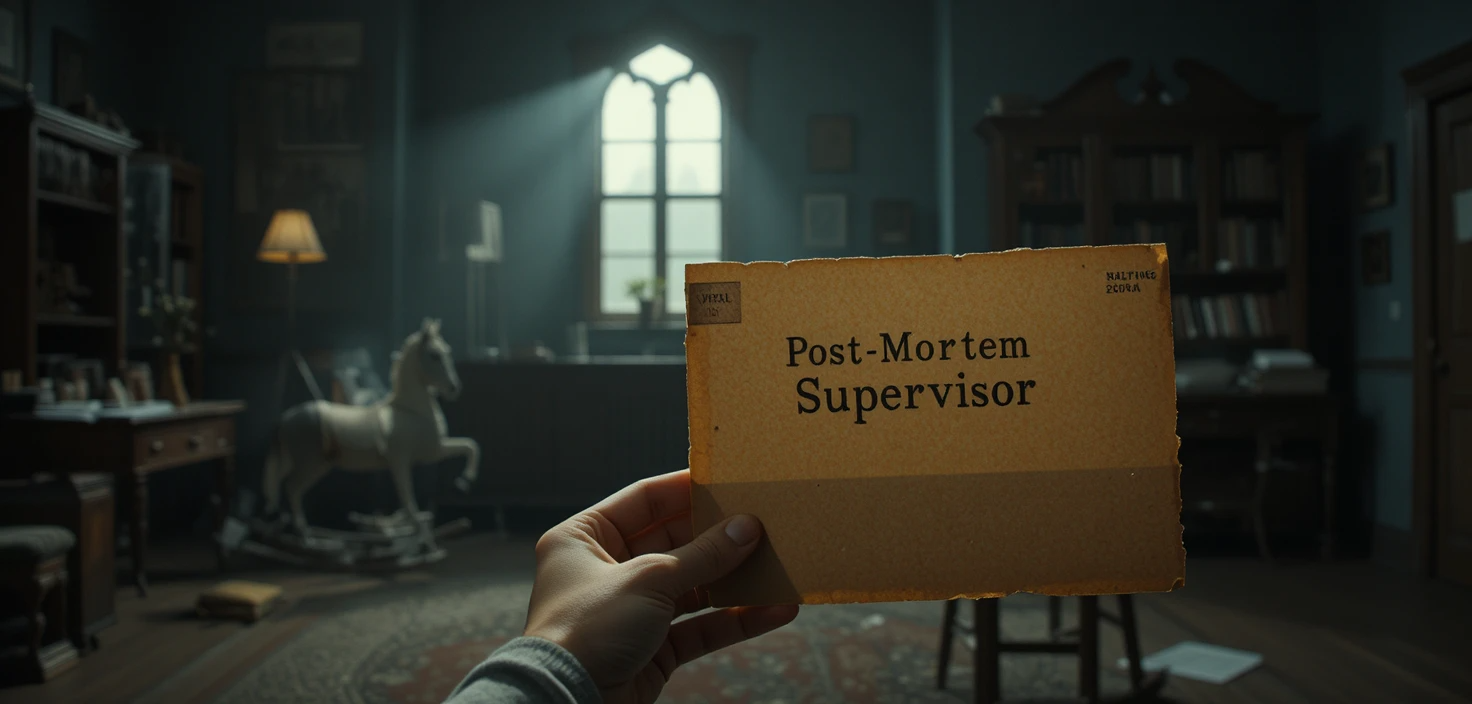
Congratulation;The envelope you hold is more than an employment contract; it is a passkey. Specifically, a passkey to the Saint Ivy’s Children’s Memorial Wing, and to the playroom you will open each night from midnight until dawn. Your designation: Post-Mortem Supervisor. The pay—$24 per hour plus additional compensation for “unexpected activity”—is substantial, but it is not merely a salary.
It is an agreement.On the surface, the duties are simple—tidying playthings, keeping the room warm, heeding the five door-mounted directives. Yet this routine transcends simple procedure. It is a ritual of vigilance, crucial for your preservation and for upholding a precarious harmony in a space where recollection, self, and simulation are forever intertwined.
This manual is unofficial; Saint Ivy’s does not issue one. It is a collection of understandings, passed quietly from one supervisor to the next, to help you manage the deep obligation you have undertaken. The central concept of your new role, the bedrock of your nightly work, is your precise title: Post-Mortem Supervisor. You are not a custodian or a conventional security guard.
You are a Post-Mortem Supervisor in the fullest meaning: one who monitors, who upholds structure, and who offers a quiet, constant anchor in a domain that functions by its own peculiar logic. You will repeat this term, “Post-Mortem Supervisor,” to yourself frequently. It will center you when the warmth fluctuates without warning or when the darkness seems to take on unusual shapes.
Your central responsibilities seem simple, yet each is laden with meaning. To put a toy away is to act as a curator of childhood. Each stuffed companion, each wooden block, each miniature saucer is not mere clutter, but a sacred vessel preserving a fleeting memory. To arrange them properly is a gesture of honor. It communicates, “You are not forgotten. Your belongings are protected.” Maintaining the room’s warmth is your most physical task.
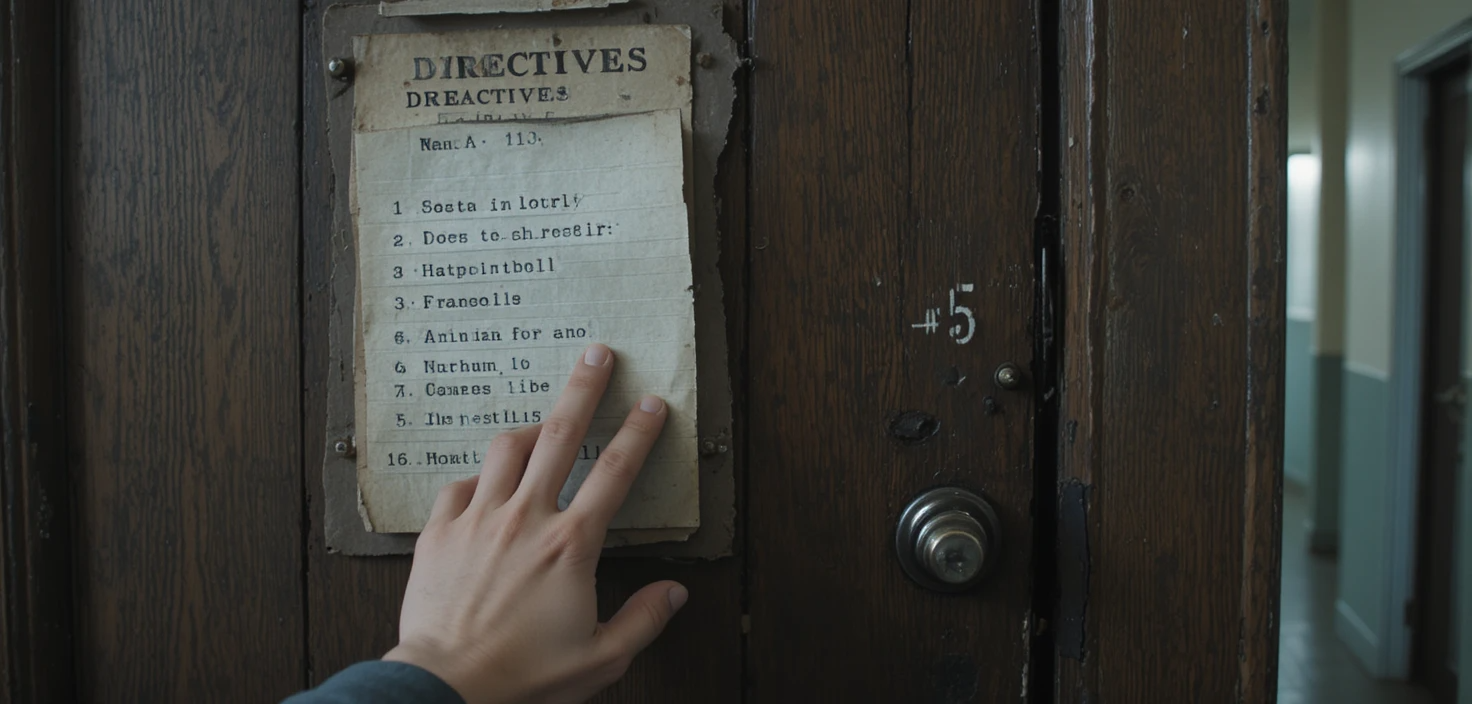
The heat is not only for coziness; it is the vitality of the space, the shield against the numbness of grief and the icy draft that invades when protocols are ignored. A sudden chill is your earliest and most consistent sign that the atmosphere is becoming agitated.
Now, we address the rules. They are your essential instructions. Do not doubt their peculiar nature; comprehend their intent.
Directive 1: Invariably unseal the playroom from within. Should the door already be unlatched upon your arrival, shut it, tally to five, and rap twice. An occupant within requires the formality.
This rule defines the structure and sacredness of the area. By unsealing it from within, you figuratively cross into their realm; you are a visitor in an autonomous zone. Discovering the door open is an uncommon but meaningful occurrence. It is not a welcome, but a diversion or an examination. Closing it re-establishes the limit. The five-second count is a pause, an interval for any residual presence to become calm. The two raps are a formal declaration of your entry, a politeness shown to invisible proprietors. It recognizes their existence before you enter.
Directive 2: Should a plaything relocate independently, retrieve it and position it correctly on the shelf. Do not observe it for an extended period. Its observation of you becomes more intense.
This is where your additional compensation provision becomes applicable. “Unexpected activity” frequently originates here. The motion is an appeal for notice, a flicker of intention. Your reaction must be routine and deliberate: collect and store. Do not wonder. Do not scrutinize. The caution about observation is paramount. Your attention grants it strength, solidifies its reality in a manner that can become persistent and directed—toward you. You are a Post-Mortem Supervisor, not an onlooker. By responding without pause, you confirm that such events fall within the standard scope of your duty, something to be placidly addressed.
Directive 3: If the sound of children’s amusement arises from behind you, grin and acknowledge it even if the area is vacant. They dislike being disregarded, and the climate cools when they are displeased.
This rule concerns recognizing the imperceptible. The laughter is an offering, an indicator of a tranquil period. To dismiss it is profound discourtesy in this setting. The smile and nod are a global signal that states, “I perceive you. Your happiness is accepted.” The link between their mood and the room’s temperature is immediate. A quick icing on the panes, your breath condensing in air—these are critical warnings. It signifies a failure in some basic respect, and the surroundings are turning adversarial. As a proficient Post-Mortem Supervisor, sustaining that ambient heat through considerate engagement is the majority of the work.
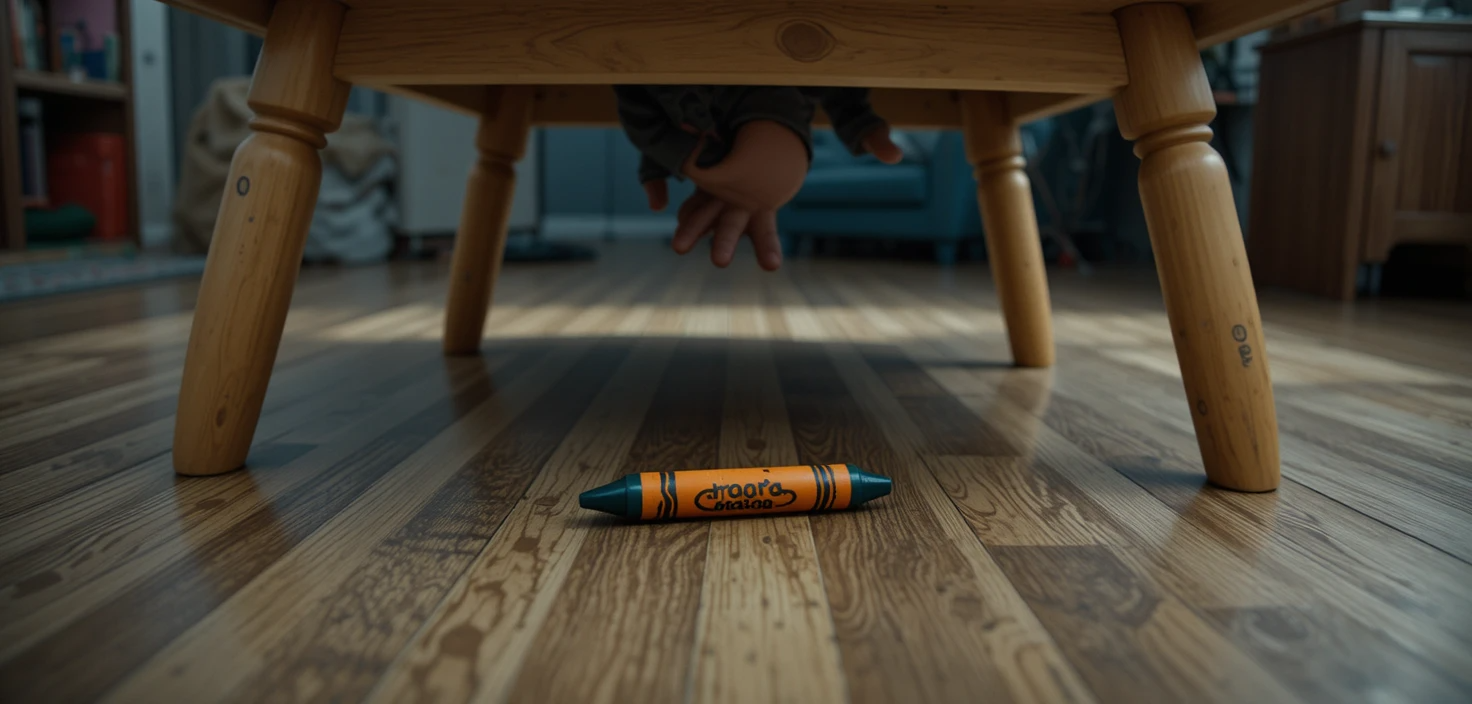
Directive 4: Should a shadow of juvenile proportions manifest beneath the activity table, present it a drawing tool and withdraw. If it accepts the tool, all is well. If it declines, activate the projection lamp. This redirects its focus.
Shadows are not the same as laughter. They are more concentrated, more tangible. The shadow beneath the table is an inhabitant that has opted to appear in a semi-solid state. The offering of a drawing tool is a bid to create, to direct energy into something benign. It is an accord. Acceptance is Favorable. Refusal signals stubbornness or playful trouble. The projection lamp provides not just illumination, but a tumult of hues and forms. It overwhelms the shadow’s perception, prompting it to scatter or become preoccupied. It is a pacific method to neutralize a potential concentration of energy.
Directive 5: At 3:00 AM precisely, the rocking horse will commence motion independently and a vocal query will arise: “Can you play with us now?” Reply gently, “Soon.” Should you utter a refusal, the horse halts its rocking and all other things commence.
This is the foundation of your shift, the nocturnal ceremony. The true trial of the deepest night. 3:00 AM is the night’s lowest point, a moment of powerful force. The rocking horse is the room’s oscillator, its timekeeper. The question is not a genuine request; it is an appeal for bond, a verification of your pledge to maintain the continuity. Your response, “Soon,” is a tender, honest deferral. It signifies “not at this moment, but this place will endure, and others will follow.” It confirms succession. To state “No” is an absolute denial, a withdrawal of expectation.
The stopping of the horse’s movement is the quieting of a pulse. And when the pulse ceases, “all other things commence.” This is the implied “hazard.” The arranged toys may stir together, the warmth may dive, shadows may separate from their sources, and amusement may shift to distress. You have violated the agreement.
As the Post-Mortem Supervisor, your efficacy is judged not by chores finished, but by the uninterrupted flow of time. A prosperous shift is a tedious one. You will depart at daybreak, having sustained the warmth, honored the directives, and safeguarded the fragile tranquility of Saint Ivy’s.
Fundamentally, your position is that of a nocturnal sentinel overseeing a gallery of remembrance, tasked with protecting lingering echoes. This duty demands a distinct combination of fortitude, perceptive understanding, and steadfast devotion to established procedures. It is not suited for all. But for those who can attend to the quiet, honor the invisible, and grasp that “soon” is a form of eternity, it is beyond mere occupation. It is a solemn, silent duty. Good fortune. Your watch starts tonight.
Leave a Reply